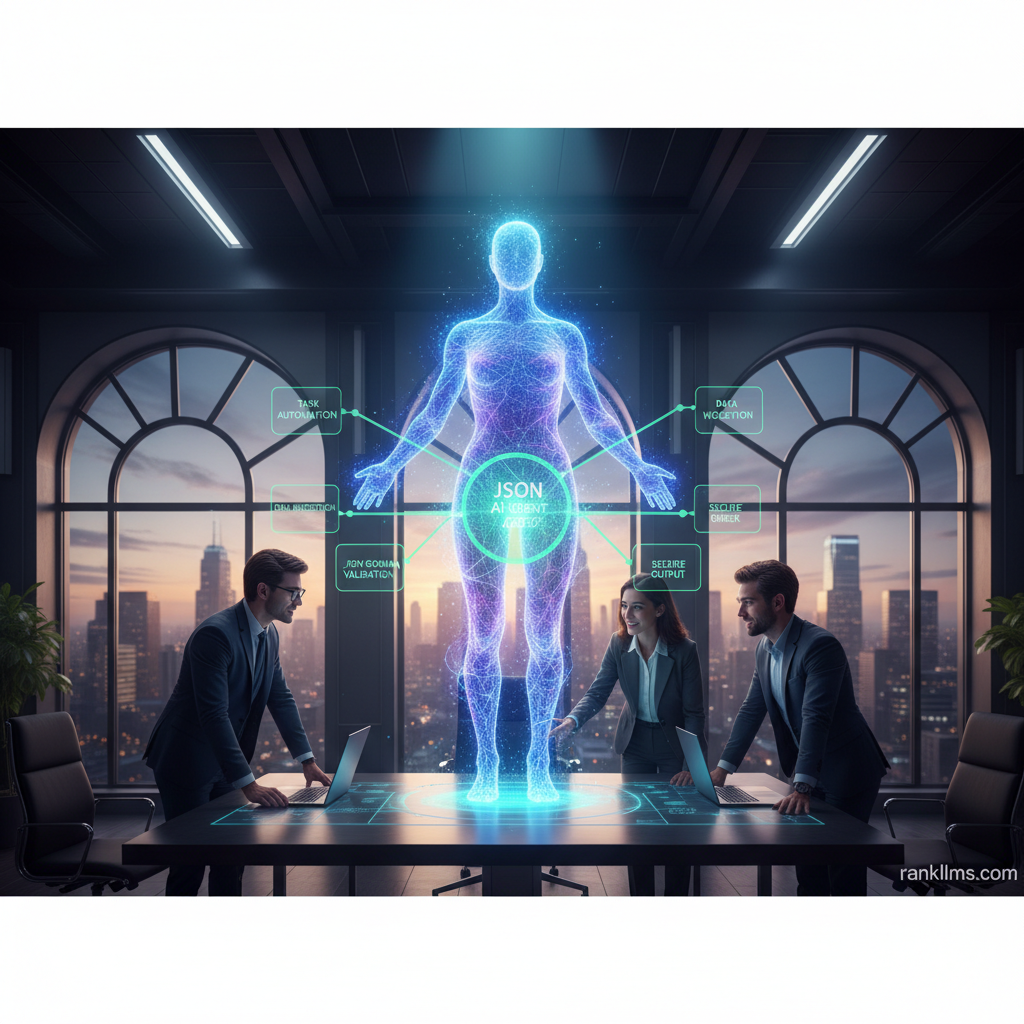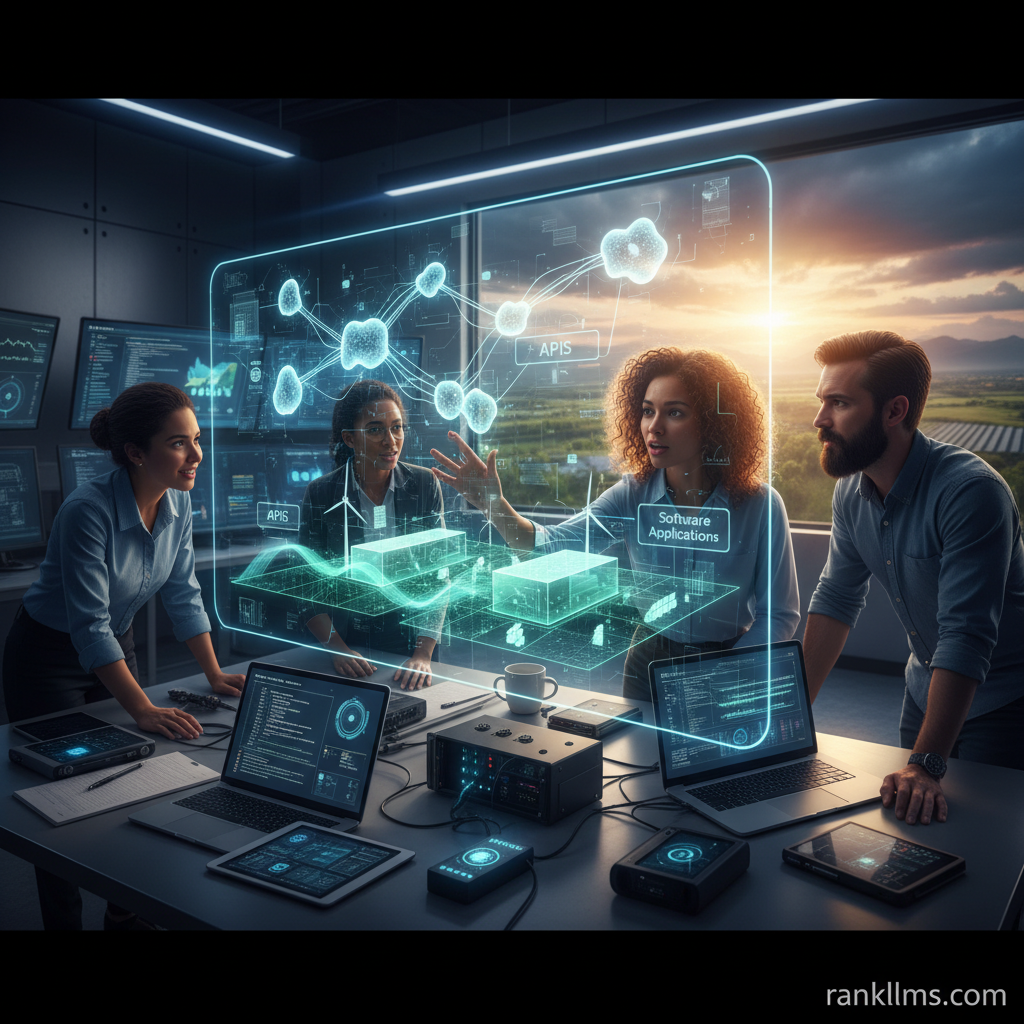
The Claude Computer Use API is an operational interface that gives Claude—Anthropic’s family of large models—programmatic, controllable access to perform actions inside software environments. Rather than returning only conversational outputs, it enables AI agents and software interaction AI to execute tasks, call services, manipulate files, and interact with UIs and APIs. In one line: Claude Computer Use API is a bridge between large language models and real‑world action through API‑driven automation.
Quick answer (featured‑snippet optimized)
The Claude Computer Use API lets developers give Claude direct, controllable access to perform tasks in software environments, unlocking AI agents and large action models (LAM) that can act (not just chat). It turns LLM reasoning into deterministic, auditable actions via scoped API calls, permissioning, and developer tooling.
Why this matters (TL;DR)
- Enables AI agents and large action models (LAM) to complete tasks end‑to‑end by interacting with applications, files, and external services.
- Shifts AI from passive assistants to active collaborators that can execute workflows via thoughtful API development.
- Introduces new product, engineering, and compliance tradeoffs (permissioning, audit trails, human‑in‑the‑loop controls).
What you’ll learn
- What the Claude Computer Use API is and how it differs from chat‑only models.
- The background and converging tech trends (AI agents, LAMs, software interaction AI).
- Strategic, technical, and compliance insights for product, engineering, and healthcare teams.
- A practical forecast and next steps for API development and integrations.
Background
What the Claude Computer Use API does
At a technical level, the Claude Computer Use API exposes a controlled interface where Claude receives environment context and a goal, then submits action intents that map to API calls, UI interactions, or sandboxed scripts. This is not purely generative text; it is an execution layer on top of LLM reasoning. In practice that means developers can create AI agents that:
- Read and transform documents,
- Open tickets in SaaS systems,
- Aggregate data from multiple APIs, and
- Drive multi‑step workflows with stateful planning.
These capabilities embody the emerging class of large action models (LAM)—models trained and tuned for planning and sequencing actions, not only for linguistic fluency.
How it relates to other concepts
- AI agents: Autonomous actors configured with goals, constraints, and a set of connectors. Claude Computer Use API is the runtime interface allowing those agents to interact with external systems safely.
- Large action models (LAM): The planning substrate; LAMs create step plans that the API maps to deterministic calls.
- Software interaction AI: The broader stack—connectors, UI hooks, and workflows—into which Claude’s execution primitives plug.
- API development: The API surface, rate limits, scoped permissions, and audit hooks are primary levers for safety and scalability.
Real-world context (healthcare example)
In healthcare, the same shift from chat to controlled action enables automated triage, documentation automation, and decision‑support workflows. For example, an agent could prefill encounter notes and suggest differential diagnoses for clinician review—not autonomously replacing clinicians, but accelerating workflows. Deployments in healthcare demand domain validation, clinician‑in‑the‑loop oversight, and robust data governance, consistent with regulatory guidance from agencies like the FDA and global health advisories (see FDA and WHO guidance on AI/ML in medical contexts) and practical notes from Anthropic’s discussion of dispatch and computer use (see Claude blog: https://claude.com/blog/dispatch-and-computer-use).
Trend
Current adoption patterns
1. Rapid prototyping: Startups and engineering teams are building proof‑of‑concept agents that automate repetitive tasks—email triage, report generation, and SaaS orchestration—by pairing Claude’s reasoning with simple connectors.
2. Platform integrations: Vendors are adding connector layers and standard SDKs to support software interaction AI across CRMs, EHRs, and ticketing platforms. The result is faster time‑to‑prototype for AI agents.
3. Regulatory and safety focus: Governments and standards bodies (e.g., the EU AI Act) and health regulators are pushing for transparency, auditability, and human oversight, increasing the compliance burden on production deployments.
Key signals to watch
- Growth of tooling for LAM orchestration and safety wrappers—policy templates, sandbox environments, and verification harnesses.
- Increased demand for API development best practices: scoped permissions, immutable audit logs, rate limits, and circuit breakers for action execution.
- Cross‑industry pilots (finance, healthcare, customer service) that instrument ROI metrics—time saved, error‑reduction, and compliance incidents.
Analogy for clarity: Think of Claude plus the Computer Use API as a highly capable remote‑controlled robot in a factory. The model is the “brain” proposing steps; the API is the safety‑checked control system that exposes only approved controls (switches, levers) and logs every move for audit and rollback.
Citations: See Anthropic’s Dispatch and Computer Use overview (https://claude.com/blog/dispatch-and-computer-use) and regulatory trends such as the EU’s AI Act proposals (https://commission.europa.eu/publications/overview-proposal-regulation-laying-down-harmonised-rules-artificial-intelligence_en).
Insight
Why Claude Computer Use API is a step‑change
It converts intelligence into reliable action by coupling LLM reasoning with deterministic execution pathways and developer controls. This combination reduces ambiguity: a model proposes an action plan; the API maps it to scoped operations that are auditable and reversible. That duality—probabilistic planning plus deterministic execution—makes AI agents both powerful and governable for business‑critical workflows.
5 practical implications for teams
1. Product: Shift roadmaps from “better replies” to automated outcomes—features that complete workflows end‑to‑end.
2. Engineering: Prioritize secure integrations—least privilege, request signing, and replayable logs are table stakes.
3. Design: Surface explainability and clear override affordances; users must understand what an agent did and why.
4. Compliance: Implement model cards, performance SLAs, and continuous monitoring, particularly for high‑risk domains.
5. Business: Reevaluate SLAs and support models when agents can act on behalf of users.
How it works (concise, step‑by‑step)
1. Developer exposes a controlled environment (API endpoints, sandbox, and UI hooks).
2. Claude receives structured context and high‑level goals via the Computer Use API.
3. The model generates a multi‑step plan (LAM‑style) and either requests permission or executes scoped API calls.
4. Every action is logged; results stream back for verification, rollback, and human oversight.
Example success metrics (to track)
- Task completion rate (with percentage requiring human override).
- Error rate per 1,000 actions.
- Time saved per completed workflow.
- Number of compliance incidents and mean remediation time.
For engineering teams, these metrics feed SLOs and inform model retraining or connector improvements.
Forecast
1–3 year outlook
- Wide adoption of AI agents in knowledge work and customer service as standardized connectors and API development frameworks make integration routine. Expect software interaction AI to become a common layer in SaaS stacks.
- Tooling for LAM orchestration—plan editors, simulation sandboxes, and safety wrappers—will mature, enabling faster and safer iteration.
3–5 year outlook
- LAMs and agent frameworks will become core enterprise automation infrastructure. Marketplaces for verified agent “skills” and certified connectors will emerge, analogous to app stores for integrations.
- Regulatory regimes will harden: mandatory documentation (model cards), continuous performance monitoring, and provenance logs will be required in high‑risk domains (healthcare, finance). This mirrors the general regulatory trajectory seen in medical AI, where agencies like the FDA expect post‑market monitoring and transparency.
How organizations should prepare (actionable checklist)
- Prototype a low‑risk agent using the Claude Computer Use API in a sandbox with strict permissioning.
- Instrument comprehensive logging, audit trails, and human‑in‑the‑loop checkpoints.
- Build cross‑functional governance (product, engineering, legal, compliance).
- Iterate with representative datasets and continuous monitoring; adopt model documentation practices early.
Future implication: organizations that embed these controls up front will move faster and safer when regulators tighten requirements.
CTA
Next steps for readers
- Developers: Experiment with a small, sandboxed agent that automates one repeatable workflow. Focus on scoped permissions and audit logging. Measure task completion rate and error rate.
- Product leaders: Reassess roadmaps to expose features that benefit from software interaction AI and prioritize API development and connector strategy.
- Compliance and clinical teams (healthcare): Insist on clinician‑in‑the‑loop validation, data governance, and post‑deployment monitoring; align with FDA and WHO guidance where applicable.
Helpful resources
- Anthropic: Dispatch and Computer Use (technical and product framing) — https://claude.com/blog/dispatch-and-computer-use
- Regulatory context: FDA guidance on AI/ML in medical devices — https://www.fda.gov/medical-devices/software-medical-device-samd/artificial-intelligence-and-machine-learning-enabled-medical-devices
- Quick starter checklist:
- Define a clear success metric.
- Limit scope and permissions.
- Add audit logging and rollback paths.
- Establish human oversight rules.
Lead magnet example
Create a one‑page PDF: “Build your first Claude‑powered agent: 30‑minute prototype checklist” — include connector templates, a minimal permission model, and a test harness for safety and metrics capture.
FAQ
Q: What is the difference between Claude Computer Use API and a chatbot?
A: Chatbots generate conversational responses; the Claude Computer Use API enables the model to perform controlled actions in software environments—effectively turning it into an AI agent or large action model (LAM) that can act on behalf of users under developer‑defined constraints (see Anthropic’s Dispatch and Computer Use notes: https://claude.com/blog/dispatch-and-computer-use).
Q: Are these agents safe to use in healthcare or finance?
A: They can be, but only with domain‑specific validation, clinician or human‑in‑the‑loop controls, robust data governance, and adherence to evolving regulatory guidance (e.g., FDA guidance and international recommendations). Continuous monitoring and transparent model documentation are essential.
Q: Where should I start as a developer?
A: Build a small, sandboxed integration with limited scope and permissions, add immutable logging and rollback paths, require human approval for high‑risk actions, and iterate based on measured performance.