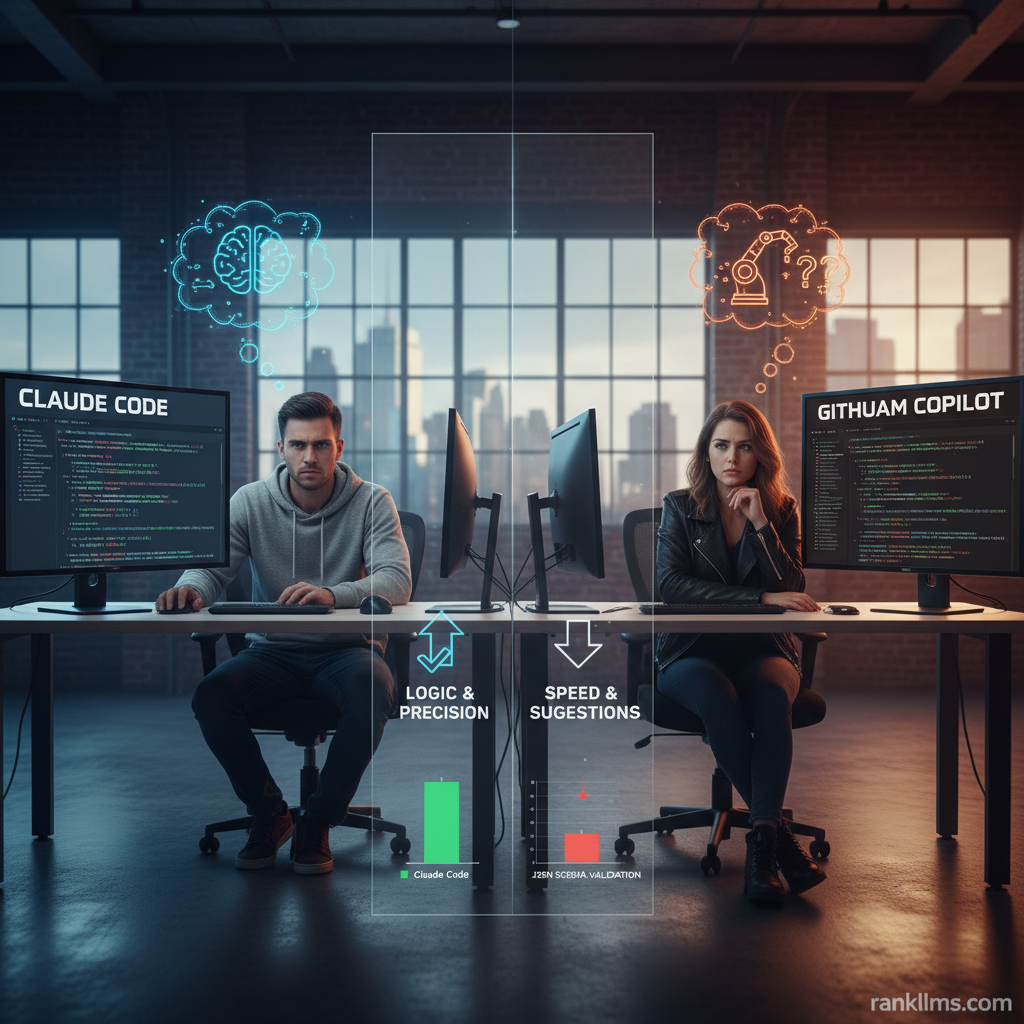
AI pair programming trends are accelerating from clever demos to production-ready habits. Teams moving beyond single-token completion now expect conversational, context-rich assistants that can fetch evidence, show uncertainty, and help orchestrate multi-step developer workflows. The result: faster routine work, fewer trivial bugs, and a growing need for provenance, auditability, and human-in-the-loop controls. This piece maps the current landscape—anchored by events like the Claude Code world tour and Anthropic AI updates—lays out practical product and governance recommendations, and forecasts how this wave reshapes the future of software engineering.
Intro
Quick answer (featured-snippet friendly)
AI pair programming trends are moving toward tightly integrated, real-time collaborative AI coding assistants that combine retrieval-augmented reasoning, multimodal inputs, and strong human-in-the-loop controls. Key outcomes include higher developer productivity for routine tasks, more reliable decision support with grounded sources, and growing emphasis on safety, privacy, and auditability.
Key takeaways
- Rapid adoption of collaborative AI coding tools has accelerated after public demos like the Claude Code world tour and timely Anthropic AI updates.
- Practical benefits include faster code generation, context-aware refactors, and reduced debugging cycles.
- Primary risks remain: hallucinations, data-privacy concerns, and concentration of capabilities among a few vendors.
- Actionable next steps: try retrieval-augmented workflows, implement modular pipelines, and add explainability layers (provenance + uncertainty displays).
Analogy for clarity: think of an AI pair programmer as a skilled co-pilot in a cockpit—excellent at checklists, suggestions, and monitoring, but requiring the pilot’s explicit approval for any major maneuvers. That same discipline (human approval gates) will determine whether these assistants become force multipliers or sources of brittle automation.
For first-hand demos of collaborative coding in action, see the Claude Code world tour wrap-up and videos: https://claude.com/blog/code-with-claude-san-francisco-london-tokyo. For broader model and alignment updates that inform many vendor roadmaps, consult the OpenAI blog for model development context: https://openai.com/blog.
Background
What is AI pair programming?
AI pair programming is the practice of using an AI assistant alongside a human developer to write, review, and refactor code in real time. Unlike traditional code completion (single-token, context-limited), modern AI pair programming emphasizes:
- Conversational context: multi-turn interactions that reference prior design decisions.
- Multi-step reasoning: planning a sequence (create branch → write tests → open PR).
- Collaborative workflows: shared sessions, role-aware prompts, and integration into CI/CD.
This shift is like moving from a typewriter’s auto-complete to a collaborative design session where the assistant can draft, propose, and explain changes.
Why the Claude Code world tour matters
The Claude Code world tour was more than a demo circuit; it was a signal to enterprises that tightly integrated, demo-grade workflows are feasible in production IDEs and team processes. Live demos showed:
- Integrated assistant actions inside popular editors.
- Workflow examples—task orchestration, test scaffolding, and context-aware refactors.
- How teams might use provenance and uncertainty UI to increase trust.
That public exposure pushed vendors and enterprise IT teams to evaluate deeper IDE and pipeline integrations. See the tour recap for concrete demos and product emphasis: https://claude.com/blog/code-with-claude-san-francisco-london-tokyo.
Recent platform context and Anthropic AI updates
Anthropic’s recent updates reinforced two critical directions: safer instruction-following and practical retrieval integrations. In short, Anthropic AI updates make collaborative AI coding more reliable by focusing on alignment, instruction-tuning, and developer-focused tooling. Across the market, trends include:
- Retrieval-augmented generation (RAG) for grounding outputs.
- Multimodal model inputs that combine code, screenshots, and design specs.
- Improved developer tooling: plugin APIs, provenance logs, and session state sharing.
Combined with open-source alternatives and competitive roadmaps, these platform moves are lowering technical barriers and increasing the diversity of viable approaches for teams.
Trend
Top 6 AI pair programming trends (snippet-ready list)
1. Retrieval-augmented, context-aware coding assistants that cite sources and surface uncertainty.
2. Multimodal coding support (code + images + design files) in collaborative sessions.
3. IDE-native, real-time collaborative AI coding with shared session state and role-aware prompts.
4. On-device or hybrid personalization layers to protect privacy while improving suggestions.
5. Productized safety: red-teaming, provenance logging, and tiered explainability for auditors.
6. Shift to human-in-the-loop ‘concierge’ workflows for multi-step automation (branching, tests, release notes).
Evidence and examples
- The Claude Code world tour demonstrated live, IDE-integrated collaboration scenarios where assistants performed refactors, authored tests, and annotated choices—making the case that such flows are production-feasible (https://claude.com/blog/code-with-claude-san-francisco-london-tokyo).
- Anthropic AI updates prioritized safer instruction following and retrieval integration, addressing common failure modes like hallucination and instruction drift.
- Industry adoption reports (e.g., enterprise surveys through mid‑2024) show rapid uptake of assistants for summarization, issue triage, and code assistance, highlighting the practical ROI of these trends.
Example: a product team used a multimodal assistant to convert a Figma design into a scaffolded React app. The assistant suggested component hierarchies, generated test stubs, and attached citations to style tokens pulled from a design system repo—illustrating trend #2 and #1 together.
Why these trends matter for collaborative AI coding
These trends flip AI coding from novelty to dependable tooling: when assistants can cite sources, expose uncertainty, and operate within defined governance boundaries, they become trusted collaborators. That trust translates into measurable gains in developer velocity (shorter PR cycles, fewer regressions) and better long-term maintainability.
Insight
Product and engineering recommendations
To operationalize the promise of AI pair programming trends, teams should:
- Build a modular pipeline: separate retrieval, reasoning, and generation. This makes auditing and incremental improvements tractable.
- Require sources and uncertainty scores for non-trivial changes; integrate a lightweight verification step into PR workflows.
- Offer a ‘concierge mode’ to orchestrate multi-step developer tasks (branch creation, tests, deployment drafts) with explicit human approvals.
- Implement on-device personalization for embeddings where practical to keep signals local and privacy-preserving.
- Establish continuous red-teaming and adversarial testing pipelines to surface prompt-injection and data-poisoning risks.
UX and governance patterns
- Tiered explainability: quick rationales for developers and detailed provenance logs for security teams.
- Human oversight model: explicit approval gates for AI-generated merges or infra changes; treat assistants as advisors, not executors.
- Policy hooks: API usage limits, economic guardrails, and role-based controls to reduce risky large-scale automation.
Analogy: think of UX and governance as flight instruments—pilots (developers) need quick glanceable indicators for immediate decisions and detailed black-box logs for post-flight investigations.
Metrics to track success
- Developer velocity metrics: time-to-merge, time-to-first-meaningful-commit.
- Adoption metrics: percent of PRs with accepted AI suggestions.
- Safety metrics: hallucination/false-positive rates and verification time overhead.
- Privacy & compliance metrics: incidents, audit flags, and provenance completeness.
These metrics align incentives—product managers get velocity, security teams get auditability, and engineers get safer automation.
Forecast
Short-term (0–12 months)
- Expect more teams to run collaborative AI coding pilots, influenced by the Claude Code world tour demos and Anthropic AI updates. Popular IDE plugins will add provenance and uncertainty displays.
- Narrow, high-value concierge workflows—release notes, test scaffolding, and code summarization—become routine.
- Vendor differentiation centers on safety features, retrieval depth, and integration quality.
Medium-term (1–3 years)
- AI pair programming becomes standard in developer toolchains. Organizations will codify usage policies and audit practices.
- Multimodal assistants will reliably handle design-to-code handoffs, cross-file refactors, and architecture explorations supported by robust retrieval and provenance.
- Open-source models and tooling will expand choices, reducing vendor lock-in.
Long-term (3–5+ years)
- The future of software engineering will feature deeply integrated collaborative AI that augments architect-level decisions, automates maintenance, and recommends design patterns—while human accountability and regulatory frameworks govern high-impact actions.
- Regulatory regimes (e.g., EU AI Act) and industry standards will demand stronger provenance, explainability, and liability clarity for delegated automation.
Scenario planning — what to watch for:
- Best case: sustained velocity with low incidents due to strong retrieval and governance.
- Middle case: productivity gains offset by persistent verification overheads.
- Worst case: concentration of capabilities and weak governance lead to outages or compliance failures.
These forecasts imply that teams who invest early in provenance, verification, and modular architectures will capture disproportionate benefits while staying resilient to downside scenarios.
CTA
Next steps for readers
- Watch the Claude Code demos for concrete collaborative coding examples and workflows: https://claude.com/blog/code-with-claude-san-francisco-london-tokyo.
- If you’re a PM or technical lead: run a 30-day AI pair programming pilot with explicit KPIs and red-team reviews. Start small—pick a concierge workflow like test scaffolding or release-note drafting.
- Subscribe to platform updates (e.g., OpenAI blog) and vendor release notes to stay ahead on alignment and retrieval improvements.
Resources and further reading
- OpenAI blog — model and alignment updates: https://openai.com/blog
- DeepMind research — multimodal and reasoning advances
- Stanford HAI — research and policy primers
- EU AI Act materials — regulatory guidance
Closing note
AI pair programming trends promise measurable gains in developer productivity and software quality, but realizing that promise requires technical safeguards, clear UX for uncertainty and provenance, and governance commitments. Treat assistants as strategic copilots—empower them for routine work, require human approval for high-impact actions, and invest in retrieval and explainability. Those choices will shape whether collaborative AI coding becomes a force multiplier for the future of software engineering or a brittle shortcut with systemic costs.