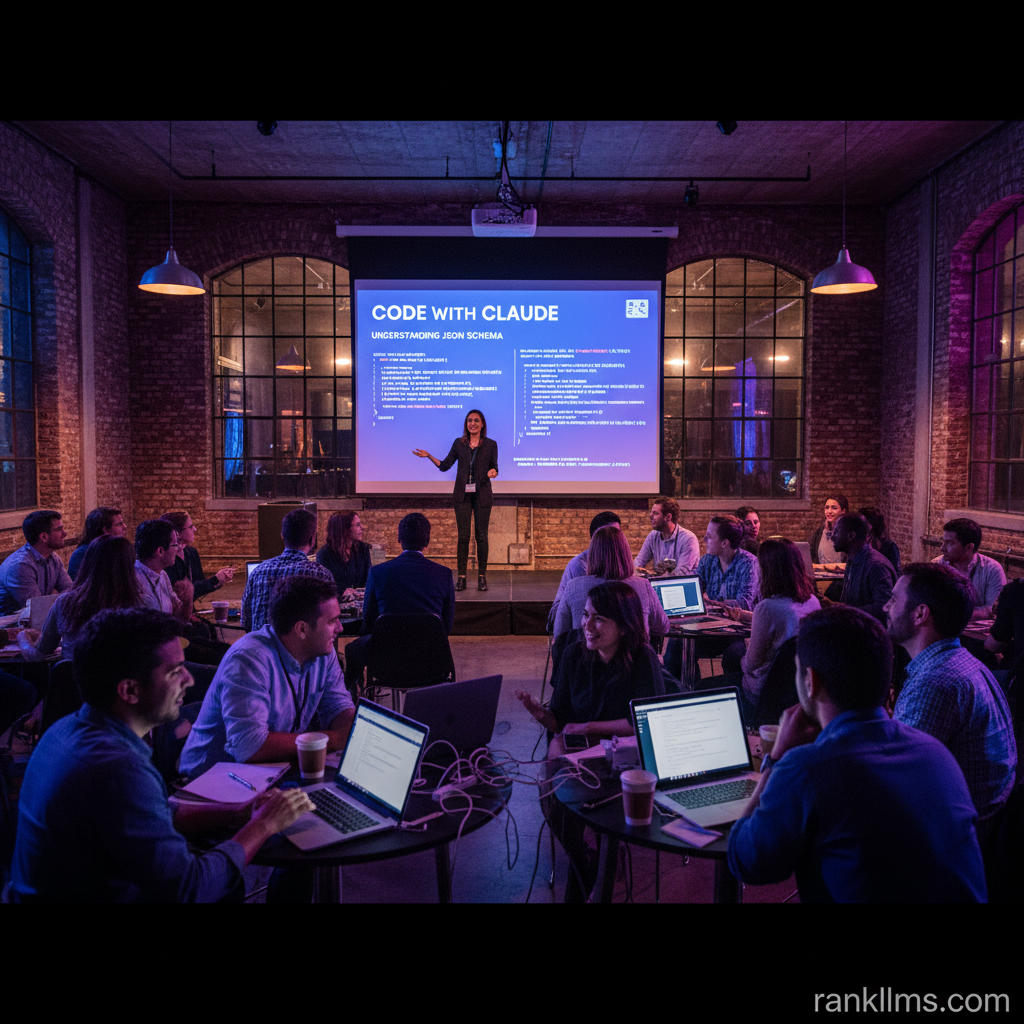
Product leaders: the comfortable world where roadmaps and feature tickets ruled is over. Today’s winners won’t be those who shipped the prettiest UI — they’ll be the ones who can orchestrate models, data, teams, and governance to turn AI into repeatable business advantage. In one line: AI product leadership roles guide product strategy, data and model decisions, and cross‑functional governance to turn AI capabilities into measurable business outcomes.
Intro — Why product leaders must become AI orchestrators
What are AI product leadership roles? In plain terms: product leaders who can coordinate models, pipelines, people, vendors, and rules to safely deliver scalable AI value.
Quick snapshot (featured‑snippet style):
- Definition: AI product leadership roles = product leaders who orchestrate models, data, teams, and governance to deliver safe, scalable AI value.
- 3 core responsibilities: identify high‑ROI use cases, set KPIs and governance, and enable cross‑functional delivery.
- Who should read this: PMs planning an AI career transformation, CTOs managing organizational change AI, and executive sponsors designing upskilling programs.
Key takeaway (30 words)
Product leaders must evolve from feature owners to AI orchestrators with new skills in data strategy, model monitoring, governance, and vendor‑agnostic orchestration to capture exponential AI value.
Analogy: think of the AI product lead as an orchestra conductor — not every musician plays every instrument, but the conductor must read the score, coordinate timing, and manage tension so the audience hears music, not chaos.
This is provocative because it demands product teams stop treating models as engineering toys. The era of throwing an LLM at a problem and hoping for the best is ending; regulators, auditors, and CFOs now ask for ROI, lineage, and incident playbooks. If you’re still optimizing for launch-day applause, you’re about to be neck-deep in production incidents and regulatory letters. Read the practical playbook below if you want a different ending.
(Read practical guidance from Claude on product management in the AI era for deeper context: https://claude.com/blog/product-management-on-the-ai-exponential and standards guidance at NIST: https://www.nist.gov/itl/ai.)
Background — How product management evolution led to AI product leadership roles
Short history (bullet timeline)
- Pre‑AI PM: Feature roadmaps, user research, and frequent A/B tests.
- Early ML PM: Prototypes, offline evaluation, and model handoffs to engineering — a handover culture.
- Today: Foundation models, retrieval‑augmented generation (RAG), and multimodal systems require continuous governance, data pipelines, and lifecycle monitoring.
Product management evolution didn’t slowly migrate to AI — it was pushed. Foundation models and vector databases made capability cheap; governance and operations made it expensive. That divergence created a new role: someone must own both value and risk.
Forces driving the shift
- Technology: Foundation models, vector DBs, parameter‑efficient fine‑tuning, and RAG let PMs prototype faster — but they require control, testing, and explainability.
- Organizational: Successful pilots need cross‑functional squads, centralized data catalogs, and role‑based upskilling.
- Regulation & trust: GDPR, the EU AI Act, and NIST guidance elevate governance, traceability, and explainability to boardroom priorities (see NIST for standards work: https://www.nist.gov/itl/ai).
Example: a customer‑support assistant that uses RAG to pull internal docs can boost CSAT instantly — but without a data catalog and access controls, it’s a compliance train wreck waiting to happen.
Evidence from enterprise practice
Enterprises are converging on a playbook: run 6–12 week cross‑functional pilots, spin up an AI governance board, implement model monitoring with drift detection, and then scale winners. Program names vary (AI Navigator, OpsAI Pilot, ModelGuard Program), but the pattern is consistent: experiment fast, govern hard, and operationalize slowly. This is the reality shaping who gets promoted — and who doesn’t.
Trend — Current trends shaping AI product leadership roles
Top trends (featured‑snippet friendly bullets)
1. Foundation and multimodal models lower build cost but raise control and transparency needs.
2. Parameter‑efficient fine‑tuning and distillation reduce deployment cost and let PMs run more experiments.
3. Vector databases + RAG are now standard for knowledge‑centric apps.
4. Model monitoring, drift detection, and explainability tooling are maturing — shifting PM focus from delivery to operations.
5. Regulatory pressure (EU AI Act, NIST, GDPR) pushes governance into product lifecycles.
Provocative claim: tools are getting so easy that the real constraint is governance and org design. If your company treats AI like a narrow engineering project, you’ll be outmaneuvered by competitors that treat it as a product-first operating model.
Implication for product management evolution
- Faster prototyping → more frequent production cycles. PMs must own lifecycle KPIs, not just launch metrics. Launch is the beginning, not the win condition.
- Greater cross‑functional coordination → new org design and role definitions. Expect AI squads that include PM, ML engineer, data owner, legal, and security in one pod.
- From vendor lock‑in to vendor orchestration. Teams will juggle internal models and SaaS LLMs; orchestration skills become a core competency.
Forecast implication: within 3–5 years, companies that invest in ModelOps PMs and AI Orchestrators will double down on operational maturity, leaving laggards to deal with rising compliance costs and reputational risk.
Insight — Practical playbook for PMs transitioning to AI orchestrators
Quick 6‑step checklist (optimized for featured snippet)
1. Prioritize 2–3 pilots with clear ROI and measurable KPIs (time saved, revenue impact, error reduction).
2. Create an AI governance board including legal, security, privacy, and business stakeholders.
3. Establish a centralized data catalog, access controls, and data quality KPIs.
4. Implement model monitoring, drift detection, and incident playbooks.
5. Launch role‑based upskilling: PMs learn prompt engineering, evaluation metrics, and MLOps basics.
6. Define success metrics and report quarterly; iterate or scale based on evidence.
Role mapping: who does what
- AI Orchestrator / AI Product Lead: owns end‑to‑end AI roadmap, KPIs, and governance alignment.
- Data Product Owner: maintains catalog, data contracts, and quality thresholds.
- ML Engineer / MLOps: model training, deployment, and monitoring pipelines.
- Legal & Security Rep: compliance, privacy, and risk mitigation.
How to measure early success (snippet friendly):
- Primary KPIs: hours saved/week, revenue impact, error reduction %, model uptime, incident frequency.
- Minimum dataset for board reviews: pilot ROI, bias checks, data lineage, and incidents.
Practical tips inspired by Claude PM strategies
- Use concise pilots to prove value quickly (6–12 week cadence). See Claude’s PM guidance for framing evaluation and experimentation (https://claude.com/blog/product-management-on-the-ai-exponential).
- Instrument evaluation with both offline and online metrics; prefer business KPIs over model‑only metrics.
- Treat explainability and drift as first‑class product features — ship monitoring dashboards as you would a new UI.
Example: a payments team shipped an LLM fraud helper as an MVP; by instrumenting transaction-level drift and a “why did the model flag this” view for ops, they cut false positives 40% in three months — and avoided a regulatory escalation.
If you’re a PM in transition, stop asking “Can we build this?” and start demanding “How will we measure, govern, and recover?”
Forecast — What AI product leadership roles will look like in 3–5 years
New role archetypes (featured‑snippet list)
- AI Orchestrator / AI Product Lead: strategic owner of model ecosystems and orchestration across vendors and internal models.
- ModelOps PM: focuses on lifecycle, monitoring, and operational SLAs for models.
- Data Product Owner: domain data stewardship and feature‑store governance.
- Responsible AI Officer: compliance, auditing, and bias remediation lead.
These are not aspirational titles — they are the promotions you’ll see on org charts by 2028.
Organizational change AI: expected shifts
- From functionally siloed teams to product‑centric AI squads including legal, security, and data expertise.
- Centralized platforms (data catalog, model registry, monitoring) combined with distributed ownership for domain models.
- Career paths: PM → AI PM → AI Orchestrator with competency ladders in data literacy, model governance, and vendor orchestration.
Future implication: companies that design these career ladders will retain AI talent; those that don’t will watch their best PMs leave for organizations that treat AI product leadership roles as real careers.
Market outlook & risk (concise)
- Upside: multimodal models and improved tooling will democratize rapid innovation, making new revenue and efficiency opportunities abundant.
- Risk: insufficient governance creates compliance and trust failures; a single high‑profile incident could cripple adoption and incur fines under evolving regulation (EU AI Act and national standards).
Provocative forecast: by 2028, a sizable share of product leaders who fail to master orchestration and governance will be moved into “maintenance” roles; growth roles will go to those who can translate models into audited, measurable business outcomes.
CTA — Start your AI career transformation today
3‑step starter plan (featured‑snippet CTA)
1. Pick one high‑impact pilot and define 3 clear KPIs (time saved, revenue, error reduction).
2. Convene an AI governance board and a cross‑functional launch squad for a 6–12 week pilot.
3. Commit to role‑based upskilling for PMs and engineers; instrument model monitoring from day one.
Resources & next steps
- Use program templates and naming patterns: AI Navigator, AugmentX Launchpad, OpsAI Pilot, ModelGuard Program to get stakeholder attention quickly.
- Read further: Claude’s practical PM guidance (https://claude.com/blog/product-management-on-the-ai-exponential) and NIST standards work for governance and evaluation (https://www.nist.gov/itl/ai).
- Offer: convert this playbook into a one‑page brief or slide deck listing pilot scope, resource needs, KPIs, and governance—handy for executive buy‑in.
Final one‑line pitch (snippet style)
To succeed in the exponential era, product managers must become AI orchestrators—combining product strategy, data stewardship, and model governance to deliver measurable, responsible AI impact.
If you want the one‑pager or a starter slide deck template to convene your governance board this week, ask for the brief — don’t wait for a production incident to force the conversation.