Intro
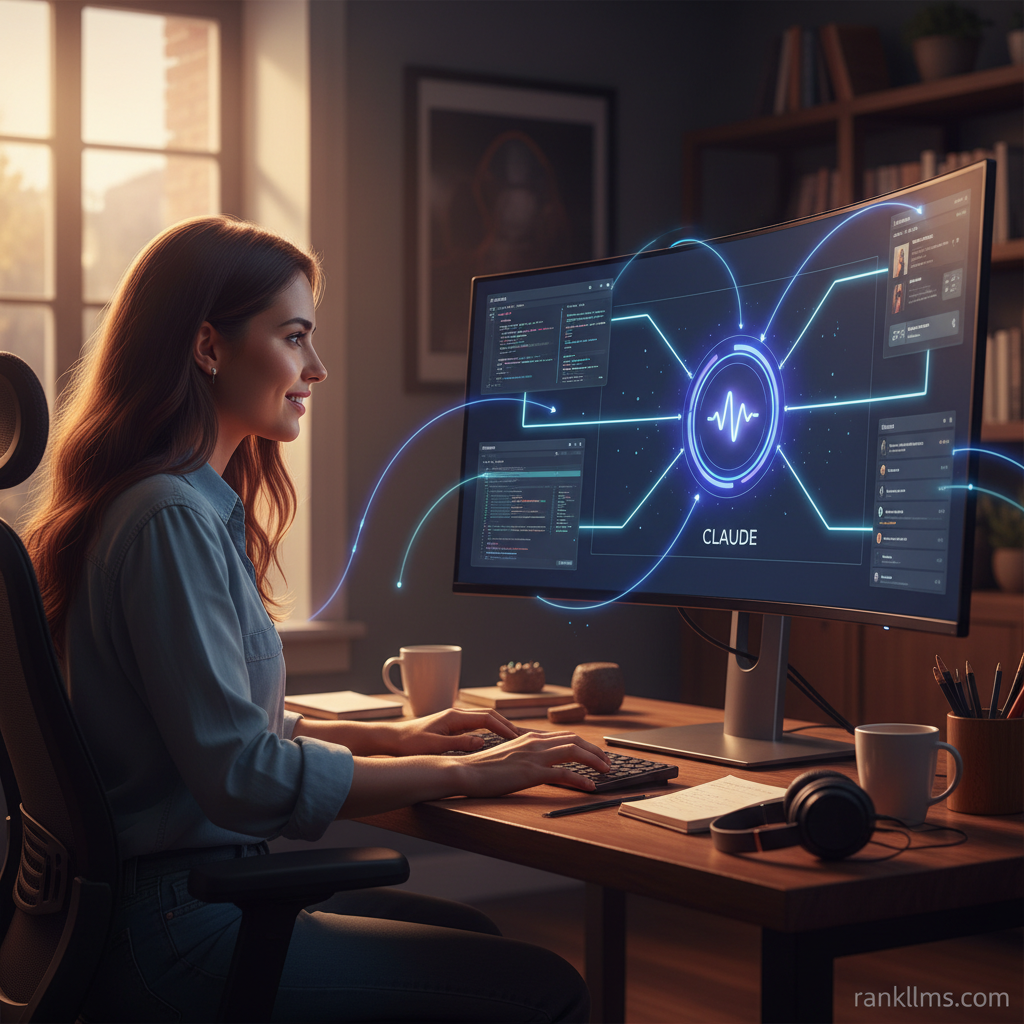
Anthropic’s acquisition of Vercept signals a shift from cloud-hosted assistants toward OS-level AI agents, changing how people interact with Claude for everyday Claude computer use — from reactive chat to proactive, context-aware orchestration at the operating system level.
TL;DR
1. What happened: Anthropic acquired Vercept to embed AI agents deeper into operating systems (Anthropic Vercept acquisition). See Anthropic’s announcement for details.
2. Why it matters: OS-level AI agents enable richer AI agent automation and tighter enterprise AI workflows, reducing friction between apps, files, and cloud services.
3. Immediate impact: Faster context switching, fewer manual steps, and new privacy & security trade-offs for Claude computer use.
What is the impact of Anthropic’s Vercept acquisition on Claude computer use? — It accelerates the shift toward OS-level AI agents that automate tasks, surface context, and orchestrate enterprise workflows directly on users’ machines.
This introduction is intentionally concise and featured-snippet friendly. The Anthropic Vercept acquisition positions Claude to move beyond chat windows and into the fabric of users’ desktops and laptops. That means Claude computer use will increasingly be less about asking the right question and more about receiving the right action at the right time — a shift from pull to push interactions. For businesses, this opens the door to integrated enterprise AI workflows that stitch together local context (files, windows, notifications) with cloud models and enterprise systems.
For readers who want the source, Anthropic’s announcement summarizes the acquisition and intentions: https://www.anthropic.com/news/acquires-vercept. Expect shorter feedback loops in product development and a fast stream of prototypes from vendors integrating OS-level capabilities into Claude or similar assistants.
Analogy: think of Claude today as a highly capable consultant you message in the cloud; embedding Vercept’s technology turns Claude into an on-premises office manager who knows which drawer your meeting notes are in and can file things for you without constant back-and-forth.
(Citation: Anthropic’s announcement on the Vercept acquisition: https://www.anthropic.com/news/acquires-vercept)
—
Background
Who’s involved
- Anthropic — creator of Claude, focused on reliable, steerable LLMs.
- Vercept — developer of lightweight, OS-level agent technology and connectors for automation.
Deal context and purpose
Anthropic’s Vercept acquisition is explicitly about expanding Claude beyond conversational interfaces into system-level automation and agent orchestration. The rationale is straightforward: to deliver Claude computer use that’s not constrained to browser tabs or cloud consoles but instead can operate with real-time access to local context and system events. Anthropic’s announcement frames the deal as a strategic move toward embedding agents more deeply into user devices to enable continuous, context-aware assistance (Anthropic Vercept acquisition — official release: https://www.anthropic.com/news/acquires-vercept).
Vercept’s capabilities that matter to Claude
- Persistent OS-level agents: lightweight processes that run on the device to monitor context and trigger actions without constant cloud roundtrips.
- Local context capture: selective capture of files, window state, notifications, and recent user interactions to reduce context switching when Claude is asked to act.
- Enterprise connectors: pre-built integrations for commonly used enterprise systems that enable end-to-end enterprise AI workflows.
Why this combination is powerful
Vercept gives Claude the “eyes and hands” on a user’s machine. For Claude computer use, that means access to the ephemeral workspace — the active browser tabs, local files, and notification stream — which historically have been hard for cloud assistants to observe in real time. The acquisition accelerates the move toward AI agent automation that coordinates across local and cloud contexts while remaining governed by enterprise policies.
A note on timelines and signals: Anthropic’s blog post announcing the acquisition is the official source for the rationale and near-term intent (see https://www.anthropic.com/news/acquires-vercept). Expect immediate integration experiments and developer previews before broad enterprise rollouts.
(Citation: Anthropic announcement — https://www.anthropic.com/news/acquires-vercept)
—
Trend
Macro trend summary
The industry is shifting from isolated LLM assistants toward agent-first experiences embedded at the OS level. This trend underpins broader expectations for Claude computer use: assistants that not only answer queries but also orchestrate tasks across apps and systems, enabling richer AI agent automation and streamlined enterprise AI workflows.
Signals and evidence
- Investment in agent architectures and orchestration platforms is increasing; vendors are prioritizing integrations and local runtime capabilities.
- There’s growing interest in OS-level features that reduce app switching and manual coordination, driven by user demand for efficiency.
- Enterprises are asking for solutions that tie local context to cloud models, allowing workflows that begin on-device and finish in enterprise systems.
Productivity context
Persistent interruptions and costly context switching are long-standing productivity problems. Research by Gloria Mark and colleagues shows that frequent interruptions fragment work and raise cognitive load, often reducing effective productivity substantially (UCI study on interrupted work: https://www.ics.uci.edu/~gmark/chi2008.pdf). In practice, teams adopting async-first practices and protected deep-work blocks see fewer meetings and higher focus time; OS-level Claude agents can augment those gains by automating routine communication (summaries, status updates) and surfacing context proactively.
Short example scenarios
1. A sales rep uses Claude on their laptop to auto-draft follow-ups using recent meeting notes captured by an OS-level agent, eliminating manual search and copy-paste.
2. An analyst asks Claude to run a local data query against a cached dataset, summarizes results, and pushes a ticket to the team tracker without exporting files or juggling windows.
Analogy: If cloud assistants are storefront helpdesks, OS-level agents are the behind-the-counter clerks who already know what you bought last time and can pre-fill the form — saving time and reducing friction.
These trends indicate that Claude computer use will increasingly be measured not by chat-turn latency but by end-to-end task completion time and how well agents respect privacy and governance constraints.
(Citations: Anthropic announcement — https://www.anthropic.com/news/acquires-vercept; Mark et al., 2008 — https://www.ics.uci.edu/~gmark/chi2008.pdf)
—
Insight
Core insight
Embedding Claude as an OS-level orchestrator transforms it from a reactive assistant into a proactive workflow layer that reduces friction across enterprise AI workflows.
How Claude computer use will change
- From pull to push: Agents proactively surface relevant actions, reminders, and drafts based on observed context rather than waiting for explicit prompts.
- From isolated tasks to chained automations: Local files, apps, and cloud services can be stitched together into multi-step automations with fewer manual handoffs.
- From human-in-the-loop to human-on-the-loop: Humans oversee and correct, but routine steps are automated, improving throughput.
Benefits
- Reduced context switching and fewer routine meetings through automated summaries and status posts. For example, weekly stand-ups could be replaced with agent-generated summaries derived from recent commits, document edits, and message threads.
- Faster task completion via local context awareness; Claude can locate the right file, extract the relevant paragraph, and draft an email without the user switching windows.
- Improved workflow continuity across devices and apps, enabling a single agent to keep track of progress across laptop, cloud storage, and team trackers.
Risks and mitigations
- Privacy & security: OS-level access raises bigger surface area risk. Mitigations include limiting local data capture, on-device processing where feasible, and strict permission controls with clear consent flows. Enterprises should default to least privilege and use encrypted, auditable connectors for sensitive systems.
- Reliability: Agents must provide transparent logs and clear undo/rollback capabilities. Robust fail-safes and “confirm before act” modes will be important for high-impact actions.
- Governance: Enterprises need policy controls and audit trails for all Claude-driven actions to satisfy compliance and accountability requirements.
Practical steps for teams
1. Map high-value manual tasks that Claude computer use could automate (reporting, follow-ups, routine system updates).
2. Pilot OS-level agents in a small team with tight privacy and permission controls; treat the pilot as an evaluative experiment.
3. Track outcomes: time saved, fewer meetings, error rates, and qualitative employee feedback.
Analogy for clarity: Embedding Claude into the OS is like giving your workspace a smart foreman who knows inventory, schedules, and who to call — but you still supervise the foreman’s decisions.
With Vercept’s tech, Anthropic can operationalize these changes faster, but success depends on careful rollout and enterprise-grade governance (see Anthropic’s acquisition announcement for context: https://www.anthropic.com/news/acquires-vercept).
(Citations: Anthropic announcement — https://www.anthropic.com/news/acquires-vercept; Mark et al., 2008 — https://www.ics.uci.edu/~gmark/chi2008.pdf)
—
Forecast
Expect rapid iteration and adoption in three waves as OS-level agents mature and Claude computer use becomes more embedded.
3–12 months (near term)
1. Rapid prototyping: Platform vendors and enterprise teams will experiment with small, focused OS-level agent features — inbox triage, meeting summarization, and auto-drafts.
2. Early productivity gains: Automated status updates and local summarization reduce recurring informational meetings and routine context-sharing tasks. Pilots will surface practical permission patterns and UX challenges.
1–3 years (medium term)
1. Broader adoption: Claude computer use becomes common among knowledge workers for tasks that require local context — legal research, data exploration, and customer follow-ups. Enterprise AI workflows mature, combining on-device agents with cloud orchestration.
2. Standardization: We’ll see established agent permission models, enterprise audit tooling, and vendor best practices for agent lifecycle management and user consent.
3–5 years (long term)
1. OS-level AI agents may become baseline OS capabilities on major platforms, changing UI patterns and app design. New interaction paradigms (agent-first notifications, proactive task cards) will replace some traditional notifications and menus.
2. New roles and marketplaces: Enterprises and vendors will build agent marketplaces and specialization roles — “automation curators,” compliance agents, and domain-specific orchestration templates.
How to prepare
- Inventory repetitive workflows and identify those with high context switching costs.
- Define security and consent requirements before agent deployment — consider on-device processing for the most sensitive data.
- Start small: pilot a single Claude-driven automation, measure results, and iterate on permissions and rollback behavior.
Future implications
The Anthropic Vercept acquisition accelerates a movement where AI is not only a cloud service but also an integrated, local operator of work. That transition will yield measurable productivity gains but requires governance to ensure agents remain safe, auditable, and privacy-preserving.
(Citation: Anthropic announcement — https://www.anthropic.com/news/acquires-vercept)
—
CTA
Clear next steps
- Subscribe for updates on Claude computer use and Anthropic developments — stay informed as OS-level agent features evolve.
- Download the one-page checklist to run a pilot for OS-level AI agents (use it to scope test cases, privacy controls, and success metrics).
- Join a webinar or forum to share pilot results and surface best practices for enterprise AI workflows and AI agent automation.
Engagement prompts
- Which task in your day would you most trust Claude to automate on your computer? Share a one-line reply in the comments or on social — we’ll compile common pilot candidates in a follow-up piece.
Snippet-ready closing one-liner
Anthropic’s Vercept acquisition accelerates a future where Claude isn’t just in the cloud — it helps orchestrate work directly on your computer, changing how teams automate, collaborate, and govern AI-driven workflows.
Related reading
- Practical strategies to reduce meeting overload and context switching: adopt async updates, protect deep-work blocks, and replace repetitive meetings with rotating summaries and on-demand Q&A (see related productivity notes and the research on interruptions: https://www.ics.uci.edu/~gmark/chi2008.pdf).
- Official Anthropic announcement: https://www.anthropic.com/news/acquires-vercept
Join the conversation: which Claude-driven automation would you pilot first, and what governance guardrails would you require?