Local AI developer communities are where global advances meet local needs: developers learn by doing, product teams get real-world feedback, and ecosystems form the pipelines that turn experiments into production. When global initiatives like Claude Code events plug into these communities, they accelerate skill-sharing, lower barriers to adoption, and seed local networks with reusable tooling and governance practices. This post walks through why that matters, how the Claude roadshow helps, and concrete steps organizers and developers can take to turn meetups into engines of community-led AI growth.
Quick answer (one-line for featured snippet)
Local AI developer communities gain faster skill-sharing, stronger networks, and practical product feedback when global initiatives like Claude Code events bring resources and momentum directly to local meetups.
Why this matters
- Bridges global expertise and local context — connecting model capabilities and best practices to language, regulation, and industry specifics.
- Accelerates community-led AI growth by providing training, starter repos, and partnership opportunities that help projects reach production.
- Reduces friction for real projects — from hiring and mentoring to compliance and localization, so cities from London to Tokyo can ship useful AI features faster.
Key benefits at a glance
1. Hands-on learning and demos from Claude Code events that lower the barrier to experimentation.
2. New hiring and collaboration pipelines via tech networking London-style meetups that attract enterprise partners.
3. Cross-pollination between hubs like Tokyo developer meetups and emerging scenes to speed localization and engineering practice.
4. Governance and safety practices shared locally to reduce hallucinations and compliance risk.
Think of a roadshow like a traveling toolkit: when it arrives, local groups don’t get just a presentation — they get enablement materials, sample code, and a handful of experts who help plant seeds that keep growing after the event ends. For reference and event details, see the Claude Code roadshow overview at Anthropic’s event page for Code with Claude (San Francisco, London, Tokyo) source.
Background
What is the Claude global roadshow?
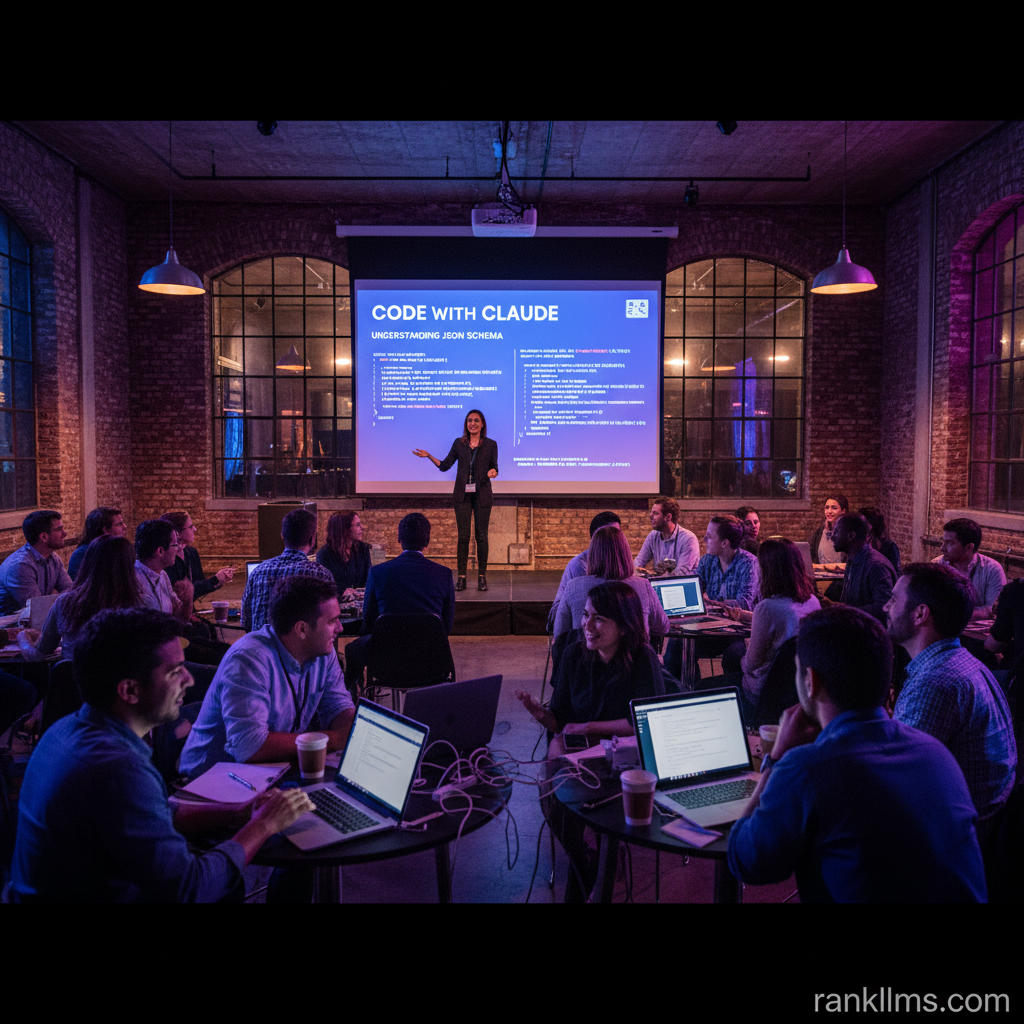
The Claude global roadshow — often run as a sequence of in-person Claude Code events — is designed to showcase developer tooling, demos, and best practices across multiple cities. These roadshows emphasize hands-on workshops, panels, and open office hours where participants can integrate model capabilities into their developer workflows. The format intentionally mixes technical deep dives (e.g., retrieval-augmented generation, prompt engineering) with product-focused sessions (e.g., demo days, enterprise integration panels), which helps different kinds of attendees walk away with tangible next steps. You can read event recaps and details on the official blog for the San Francisco, London, and Tokyo stops source.
Why local AI developer communities matter
Local AI developer communities are the translation layer between research and real-world impact. They understand local data privacy rules, language nuances, industry workflows, and hiring realities. These communities provide:
- Mentorship and apprenticeship pathways for junior developers.
- Rapid feedback loops from practitioners who test prototypes in domain contexts (e.g., healthcare forms in different languages).
- Recruitment channels where startups and enterprises meet engineering talent.
A practical example: a Tokyo developer meetup focused on localized intent detection can adapt a global demo into a Japanese-specific dataset and produce a deployable pipeline in weeks rather than months. This kind of rapid iteration is impossible to sustain from a central office alone.
Typical formats and stakeholders
Common formats include code sprints, lightning talks, hackathons, and office-hours with product engineers. Stakeholders range from individual devs and startup founders to enterprise practitioners and platform teams coordinating Claude Code events. Hybrid arrangements (in-person plus streamed office hours) extend reach while keeping the hands-on benefits of local gatherings.
By acting as both social infrastructure and technical incubator, local AI developer communities are indispensable to responsible, scalable AI adoption.
Trend
Community-led AI growth is scaling
Organizers increasingly report higher engagement when events blend deep technical content with pragmatic product sessions. This mix fosters community-led AI growth because attendees can immediately test ideas, recruit collaborators, and iterate. Many groups now run hybrid events, launch satellite meetups, and share curriculum across chapters. The result: reproducible event recipes and starter artifacts that accelerate adoption in secondary cities.
Evidence shows that portable content — starter repos, demo apps, governance checklists — helps new chapters get started faster. The Claude roadshow intentionally packages reusable workshops and artifacts for local groups to adopt, helping smaller meetups punch above their weight. For more about how these roadshows operate across major hubs, see the Claude Code event page source.
City spotlights: how different hubs benefit
- Tech networking London: London’s strong enterprise presence makes it ideal for piloting governance tools, enterprise integrations, and hiring-focused meetups. A tech networking London event might host an employer showcase, pairing enterprise teams with local startups to test compliance workflows.
- Tokyo developer meetups: Tokyo’s engineering culture and emphasis on craftsmanship accelerates implementation-focused workshops. Local meetups often emphasize localization—adapting prompts, tokenization strategies, and evaluation metrics for Japanese-language models.
The role of Claude Code events
Claude Code events act as accelerants. They provide:
- Portable content that local organizers can reuse.
- Shared artifacts — example apps, datasets, and governance templates — to reduce duplication of effort.
- Visiting product engineers and office hours that bridge the product-to-community gap.
Imagine each stop on the roadshow as a seed packet: organizers plant the seeds, communities water and adapt them, and soon multiple local projects bloom — sometimes in unexpected but highly relevant domains like regional legal tech or multilingual customer support.
Insight
How Claude’s roadshow concretely benefits local AI developer communities
The roadshow delivers practical, short-form learning and immediate outcomes:
- Skills transfer: compact workshops on retrieval-augmented generation, prompt engineering, and lightweight deployments help teams build production-ready flows.
- Trust & safety: sessions on provenance metadata, attribution, and auditing directly address hallucinations and compliance—vital in regulated sectors.
- Recruitment & product feedback: demo days and hands-on sessions generate rapid user research and hiring leads, turning attendees into collaborators.
A concrete example: after a Claude Code workshop, a London meetup piloted an enterprise-facing document summarization pipeline using retrieval augmentation and provenance tags. Within two months, they had a prototype that passed an internal compliance review and attracted a pilot customer. That’s the kind of outcome that scales community credibility and attracts talent.
Actionable playbook for community organizers
1. Co-host a Claude Code event: request workshop kits and speaker slots to lower overhead and tap external expertise.
2. Localize content: adapt sample apps and prompts for local languages and verticals—local datasets matter.
3. Emphasize provenance and governance: run a live exercise on source attribution during demos to make safety practices tangible.
4. Follow up with mentorship sprints: maintain momentum with office hours, a curated repo, and pairing sessions.
This playbook is intentionally low-friction: the goal is to convert curiosity into concrete projects and measurable community outcomes.
Metrics to track community impact
- New project launches and open-source contributions stemming from events.
- Attendee-to-collaborator conversion rate (people who join projects after meetups).
- Employer interest and hiring leads generated through networking-focused meetups.
These metrics help organizers quantify success, secure sponsors, and iterate on formats that best support community-led AI growth.
Forecast
Short-term (6–12 months)
Expect more regional roadshows and partnerships that put Claude Code events into secondary cities. Hybrid formats will proliferate, letting Tokyo developer meetups and other hubs tune into expert sessions while keeping local hands-on workshops. More organizers will adopt starter kits and governance templates to reduce event prep time.
Mid-term (1–3 years)
Community toolchains will standardize. We’ll see widely-adopted starter kits, governance templates, and provenance tooling in community repositories. Local open-source projects shepherded by meetups will become reliable pilot partners for enterprise teams exploring model integrations. Cities with strong tech ecosystems (e.g., London) will act as proving grounds for enterprise-grade governance, while engineering-focused hubs (e.g., Tokyo) will refine localization and efficiency best practices.
Long-term (3–5 years)
Local AI developer communities will become the primary drivers of domain-specific AI adoption—healthcare, legal, creative industries—deploying multilingual, privacy-aware systems tailored to regional needs. Policy and standards around provenance, watermarking, and auditing will be routinely taught at meetups, lowering systemic risk as adoption scales. In short, the model will shift from centralized rollout to a distributed, community-powered deployment pipeline.
Analogy: just as local farmer cooperatives turned seeds and techniques into regionally adapted crops, local AI communities will turn model building blocks into domain-specific solutions that feed industry needs sustainably.
For more context on the roadshow model and event listings, see Anthropic’s Code with Claude event page source and Anthropic’s broader resources for developers source.
CTA
What organizers and developers can do next
- Organizers: apply to co-host a Claude Code event or request workshop materials to bootstrap a session that fosters community-led AI growth.
- Developers: join a local AI developer community, attend tech networking London-style meetups or Tokyo developer meetups, and bring a project to demo.
Quick checklist (ready to use)
- Secure a venue and date aligned with a Claude Code event window.
- Request official workshop kits and speaker support from the roadshow organizers.
- Prepare a localization plan (language, dataset, industry examples).
- Schedule follow-ups: mentorship sprints, an open-source repo, and hiring/networking time.
Final thought (one-line)
Local AI developer communities that tap global initiatives like Claude’s roadshow unlock faster learning, higher-quality products, and a sustainable path to community-led AI growth.
Related reading: Anthropic’s Code with Claude event page offers practical recaps and materials to help organizers plan their next meetup source.