Muse Spark 1.2: Technical Specifications, Pricing, and Context Length
Technical review of Meta Muse Spark 1.2: 1M context window, context compaction, 82.9% Terminal-Bench score, token pricing, and co-training with Muse Code.

Synthesizing article benchmarks & model metrics...
Meta’s Muse Spark 1.2 is a specialized foundation model engineered specifically for autonomous software engineering, repository-scale refactoring, and multi-step agent trajectories. Launched on August 5, 2026 alongside the Muse Code terminal agent, Muse Spark 1.2 was co-trained directly with its agent runtime, incorporating context compaction, goal conditioning, and subagent worktree orchestration into the underlying weights.
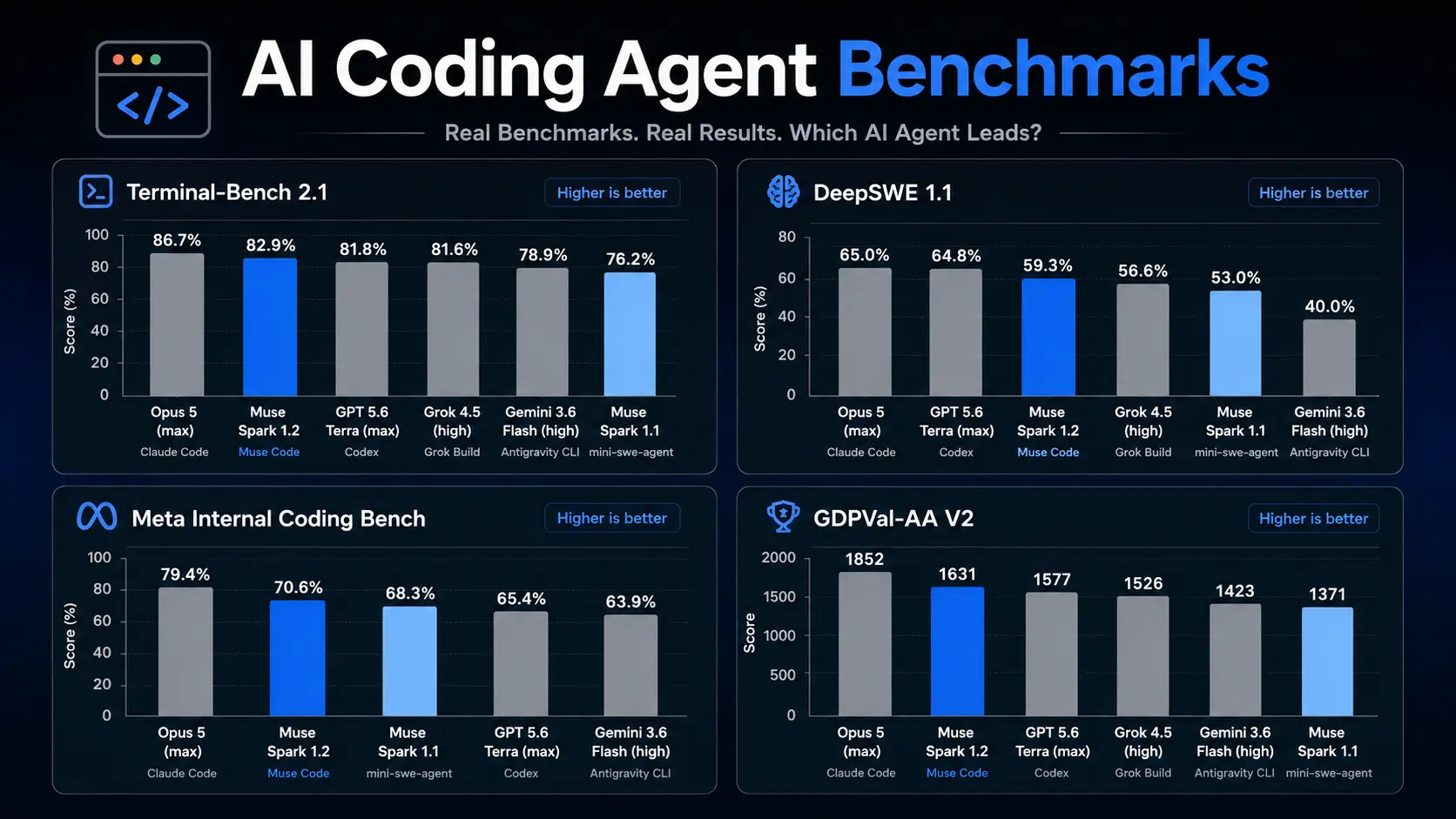
On standardized benchmarks, Meta reports Muse Spark 1.2 achieving 82.9% on Terminal-Bench 2.1, surpassing Claude Sonnet 5 (80.4%) by +3.1% relative and scoring an industry-leading 90.3% on MCP-Atlas tool execution. Explore where Muse Spark ranks in our AI Model Leaderboard and Full LLM Model Directory.
Executive Summary & Core Specification Matrix
| Specification | Muse Spark 1.2 Specification |
|---|---|
| Developer | Meta Superintelligence Labs |
| Release Date | August 5, 2026 |
| Primary Domain Focus | Autonomous software engineering, CLI agents, multimodal code |
| Context Window | 1,048,576 tokens (1M Standard) |
| Standard Input Price | $1.25 per 1M tokens |
| Cached Input Price | $0.15 per 1M tokens |
| Standard Output Price | $4.25 per 1M tokens |
| Contributor Tier Rates | $0.10 input / $0.20 output (Activity data shared) |
| Multimodal Perception | Native Text, High-Resolution Image, Video |
| Tool Calling & MCP | Native function calling, 90.3% MCP-Atlas score |
| Primary Runtime | Meta Muse Code, Meta Developer API |
Architectural Advancements: Model-Harness Co-Training
The critical technical differentiator in Muse Spark 1.2 is co-training with the Muse Code runtime:
- Context Compaction: Rather than carrying an ever-expanding conversational history that degrades attention fidelity, Muse Spark 1.2 was trained to compress past tool executions, bash outputs, and compiler traces into compact state representations.
- Subagent Worktree Coordination: The model understands Git worktree isolation, allowing it to delegate sub-tasks to parallel agent workers without generating conflicting file modifications.
- Continuous Execution Persistence: In an automated optimization experiment, Muse Spark 1.2 executed over 1,000 continuous tool calls across a 24-hour window, writing, profiling, and optimizing custom Triton GPU kernels on NVIDIA Hopper hardware without state collapse.
graph TD
    A["Developer Goal"] --> B["Muse Code Runtime"]
    B --> C["Muse Spark 1.2 Engine"]
    C --> D["Context Compaction & Planning"]
    D --> E["Tool Calls & Subagent Execution"]
    E --> F["Repository Diff & Test Suite"]
    F --> G["Final Code Verification"]
Benchmark Comparisons: Terminal-Bench 2.1
Meta evaluated Muse Spark 1.2 against top frontier models on Terminal-Bench 2.1:
| Model | Terminal-Bench 2.1 Score | Leaderboard Rank | Margin Analysis vs Muse Spark 1.2 |
|---|---|---|---|
| Claude Opus 5 Max | 86.7% | #1 | Opus leads by +3.8 pts (+4.6%) |
| Muse Spark 1.2 | 82.9% | #2 | Frontier Baseline |
| GPT-5.6 Terra | 81.8% | #3 | Muse Spark leads by +1.1 pts (+1.3%) |
| Grok 4.5 High | 81.6% | #4 | Muse Spark leads by +1.3 pts (+1.6%) |
| Claude Sonnet 5 | 80.4% | #5 | Muse Spark leads by +2.5 pts (+3.1%) |
| Gemini 3.6 Flash High | 78.9% | #6 | Muse Spark leads by +4.0 pts (+5.1%) |
| Muse Spark 1.1 | 76.2% | #7 | Muse Spark 1.2 leads by +6.7 pts (+8.8%) |
Methodological Note: Scores represent vendor-reported evaluations. Terminal-Bench evaluates live command-line tool execution, flag usage, and error recovery in real bash environments. For standard benchmarks, see our SWE-bench Verified Guide.
Token Economics: Standard vs Contributor Tier
Meta provides two commercial access tiers through the Meta Developer API:
- Standard Developer Tier: $1.25/M input and $4.25/M output, offering standard zero-retention enterprise privacy terms.
- Discounted Contributor Tier: $0.10/M input and $0.20/M output (a 92% input discount and 95% output discount). In exchange, Meta receives telemetry and interaction data to train future models.
For independent developers, open-source projects, and exploratory scripting, the Contributor tier provides exceptional value. For proprietary corporate codebases, standard rates or self-hosted models like Muse Glimmer remain required.
Final Verdict
Meta Muse Spark 1.2 represents the vanguard of harness-co-trained coding models.
By pairing an 82.9% Terminal-Bench score with 1M context length, context compaction, and $1.25 / $4.25 pricing, Meta delivers an engine purpose-built for the long-horizon autonomous workflows that define modern software engineering.
Read our complete How to Use Meta Muse Code Guide and track real-time benchmark scores on our AI Model Leaderboard.
RankLLMs independent evaluations verify official benchmarks against reproducible testing suites, community logs, and provider documentation.
- •Meta AI Research: Introducing Muse Code and Muse Spark 1.2(Primary Source →)
- •Meta Developer: Muse Spark Platform(Primary Source →)
- •Reuters: Meta Launches New AI Coding Tool Powered by Muse Spark 1.2(Primary Source →)
Was this benchmark analysis helpful?
Thank you for your feedback! We update our benchmarks weekly based on developer input.
Lucky Yaduvanshi(luckyyaduvanshi.in →)
Founder of RankLLMs • AI Researcher & Software Engineer focusing on LLM benchmarking, DevOps, and autonomous coding agents.
Recommended Reading
Continue exploring related technical benchmarks, model deep-dives, and autonomous coding agent guides.
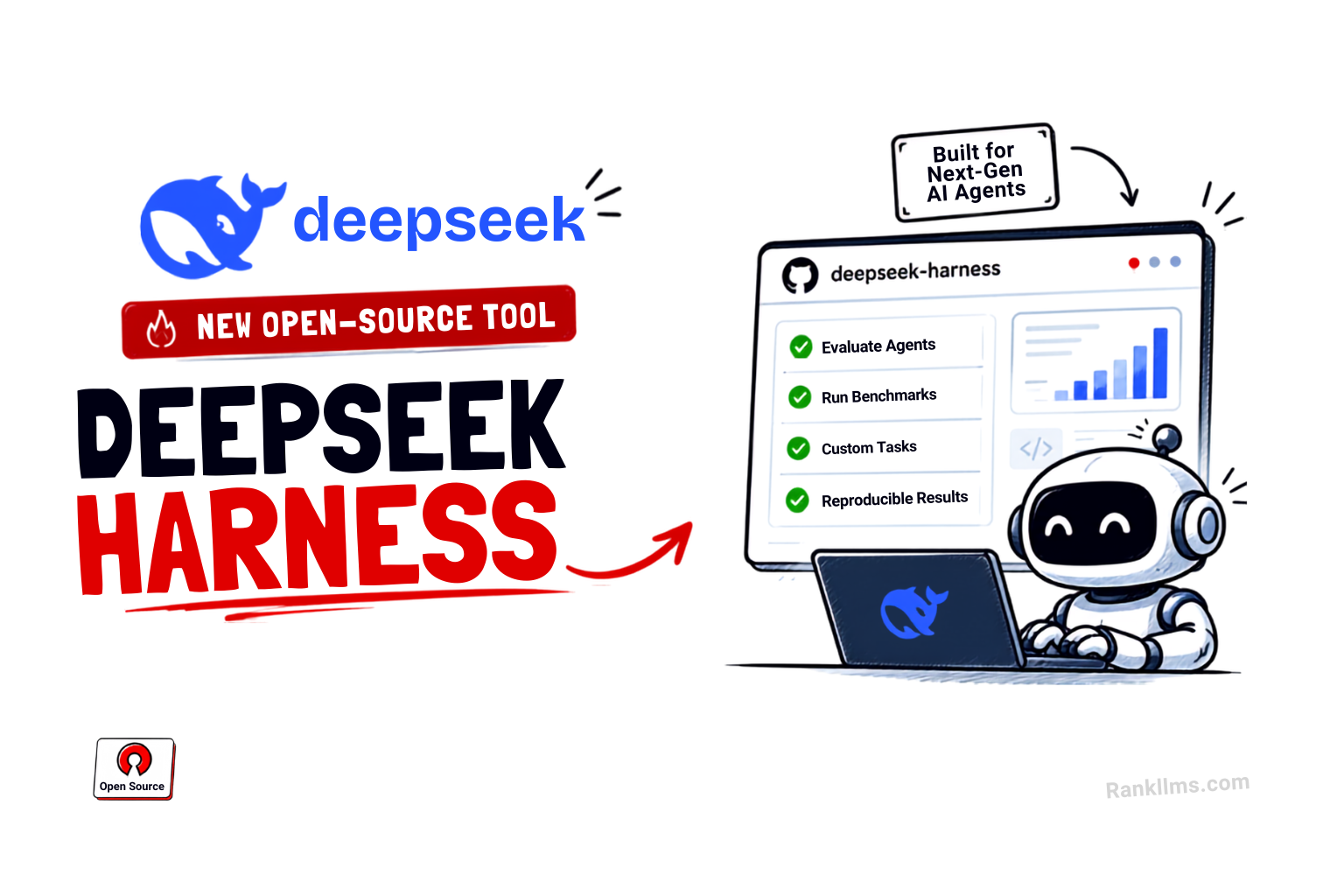
DeepSeek Harness: Architecture, Tool Execution, and Setup Guide
Comprehensive technical guide to DeepSeek Harness (dsh): Cordis micro-kernel architecture, append-only trajectory tracing, pluggable model adapters, and local deployment.
Lucky Yaduvanshi
DeepSeek V4 Pro 0813 vs GLM-5.3: Frontier Agent Benchmarks and Architecture
Frontier agent comparison: DeepSeek V4 Pro 0813 (1.6T MoE) vs Zhipu AI's GLM-5.3 across Terminal-Bench, SWE-bench, reasoning, and API economics.
Lucky Yaduvanshi
GLM-5.3 in ZCode: Agentic Coding Integration and Evaluation
Z.ai rolled out GLM-5.3 to all ZCode users with free tier access, reset quotas, and top scores on CyberGym (84.5%), GDPval-AA, and Terminal-Bench 2.1 (88.2).
Lucky Yaduvanshi
ZCode vs DeepSeek Harness: Integrated IDE vs Modular Agent Framework
ZCode and DeepSeek Harness represent two contrasting futures for AI coding agents: a full-stack desktop ADE vs a modular, plugin-based Cordis runtime. Here is how they compare in architecture, benchmarks, and real-world developer workflows.
Lucky Yaduvanshi