Muse Code vs Claude Code: CLI Coding Agents Head-to-Head
Comprehensive head-to-head comparison between Meta Muse Code (powered by Muse Spark 1.2) and Anthropic Claude Code across Terminal-Bench, agent architecture, token pricing, and large repository workflows.


Synthesizing article benchmarks & model metrics...
The battle for developer terminal dominance has intensified. Meta launched Muse Code in public beta, powered by the purpose-built Muse Spark 1.2 model, directly targeting Anthropic’s established Claude Code CLI ecosystem. While Claude Code has spent over a year maturing from an internal terminal prototype into an enterprise-grade agent with Model Context Protocol (MCP) and VS Code integration, Muse Code introduces an architectural challenge built around persistent background workers, isolated Git worktrees, and crash-resilient event logging.
The benchmark results confirm this is a top-tier contest. Meta reports Muse Spark 1.2 achieving 82.9% on Terminal-Bench 2.1, compared to 80.4% for Claude Sonnet 5—a +3.1% relative advantage for Meta’s newer architecture. Furthermore, Meta reports a 90.3% score on MCP-Atlas tool orchestration, while Anthropic posts 63.2% on SWE-bench Pro and 81.2% on OSWorld-Verified.
This detailed comparison evaluates the technical architecture, execution reliability, token pricing models, and developer workflows of both autonomous CLI coding agents. Compare real-time benchmarks in our AI Model Leaderboard and review individual model scorecards for Claude Sonnet 5 and Claude Fable 5.
Executive Comparison: At a Glance
| Feature / Dimension | Meta Muse Code | Anthropic Claude Code | Category Leader |
|---|---|---|---|
| Product Maturity | Public Beta (Launched Aug 2026) | Mature Production Release | Claude Code (Extensive tooling & stability) |
| Primary Underlying Model | Muse Spark 1.2 (1M Context) | Claude Sonnet 5 / Opus 4.5 | Tie (Top-tier coding frontier) |
| Terminal-Bench 2.1 | 82.9% | 80.4% | Muse Code (+3.1% relative margin) |
| SWE-bench Pro Score | Not Directly Reported | 63.2% | Claude Code (Verified industry benchmark) |
| Tool Calling Benchmark | 90.3% (MCP-Atlas) | Documented Pioneer of MCP | Claude Code (Ecosystem depth) |
| Multi-Agent Orchestration | Persistent Background Agents + Worktrees | Subagents, Background Tasks, Hooks | Muse Code (Native isolated worktrees) |
| Crash Recovery & Rollback | Append-Only Event Log Replay | Checkpoints & Conversational Rewind | Claude Code (Granular user controls) |
| IDE & Tool Integration | Terminal CLI First | Terminal CLI + Native VS Code + GitHub | Claude Code (Comprehensive IDE support) |
| Standard API Token Cost | $1.25 / $4.25 per 1M | $2.00 / $10.00 per 1M ($3/$15 standard) | Muse Code (58% lower input, 72% lower output) |
| Discounted / Flat Pricing | $0.10 / $0.20 (Contributor Tier) | $20/mo Pro, $100+/mo Max flat tiers | Context-Dependent |
Architectural Deep-Dive: Persistent Subagents vs Governed Primitives
The core architectural divergence between Muse Code and Claude Code lies in how each runtime orchestrates multi-step, autonomous developer workflows:
1. Muse Code: Persistent Background Agents & Parallel Worktrees
Meta designed Muse Code to solve the state-drift problem inherent in long-running software engineering tasks:
- Persistent Background Agents: Rather than spinning up ephemeral subagents that discard context upon task completion, Muse Code keeps specialized background agents alive throughout an entire development session.
- Isolated Worktrees: When executing broad refactoring or feature additions, Muse Code fans out tasks to parallel subagents operating in isolated Git worktrees. This prevents file locking, race conditions, and corrupted intermediate states.
- Append-Only Event Logging: All tool invocations, shell commands, and code diffs are written to an immutable local event log. If a network disconnect or runtime crash occurs 3 hours into a refactor, Muse Code reconstructs its state graph and resumes without restarting from scratch.
2. Claude Code: Mature Governance & Extensible Primitives
Anthropic’s approach focuses on enterprise safety, developer control, and ecosystem interoperability:
- Checkpoints and Rewind: Developers can create deterministic checkpoints before executing high-risk refactors, allowing one-click rollback of both code modifications and conversational state.
- Model Context Protocol (MCP): Native, battle-tested integration with hundreds of MCP servers (PostgreSQL, GitHub issues, Slack, AWS, Linear) allowing standardized external context ingestion.
- Claude Agent SDK: Exposes the exact internal orchestration primitives used by Claude Code, enabling engineering teams to build custom internal developer agents.
Benchmark Analysis: Calculated Deltas and Nuances
Evaluating coding agents requires analyzing both the underlying LLM intelligence and the effectiveness of the surrounding agent scaffolding:
| Benchmark Suite | Muse Spark 1.2 (Muse Code) | Claude Sonnet 5 (Claude Code) | Calculated Margin Analysis |
|---|---|---|---|
| Terminal-Bench 2.1 | 82.9% | 80.4% | Muse Spark leads Sonnet 5 by +2.5 pts (+3.1% relative) |
| DeepSWE v1.1 | 59.3% | Not Reported | Vendor-reported; comparable to mid-tier frontier models |
| SWE-bench Pro | Not Reported | 63.2% | Anthropic verified; among the highest recorded frontier scores |
| MCP-Atlas Tool Use | 90.3% | Not Reported | Measures complex parameter extraction and multi-tool chaining |
| OSWorld-Verified | Not Reported | 81.2% | Measures desktop operating system navigation and CLI execution |
| BrowseComp Multi-Agent | Not Reported | 86.6% | Measures autonomous web research and verification across agents |
Methodological Note: While Muse Spark 1.2 holds a slight 2.5-point edge on Terminal-Bench 2.1, these evaluations were conducted on separate vendor harnesses. Meta noted that Muse Spark 1.2 was co-trained with the Muse Code scaffolding, maximizing prompt-harness alignment.
For comprehensive context on industry coding standards, read our guide to SWE-bench Verified & Pro.
Token Economics: Subscription vs Pay-As-You-Go
Pricing structures differ significantly between Anthropic’s subscription-first model and Meta’s pay-as-you-go developer API:
| Pricing Metric | Muse Code (Standard Tier) | Muse Code (Contributor Tier) | Claude Code (API Standalone) | Claude Code (Flat Subscriptions) |
|---|---|---|---|---|
| Input Price / 1M | $1.25 | $0.10 | $2.00 (Promo) / $3.00 (Std) | Included in Pro / Max |
| Output Price / 1M | $4.25 | $0.20 | $10.00 (Promo) / $15.00 (Std) | Included in Pro / Max |
| Cached Input / 1M | $0.125 | $0.002 | $0.20 / $0.30 | Shared rate limit pools |
| Privacy Terms | Standard Zero-Retention | Data Used for Meta Training | Enterprise Zero-Retention | Enterprise Governance |
Economic Takeaways:
- Direct API Savings: On standard API rates, Muse Code delivers a 58.3% savings on input tokens and 71.7% savings on output tokens compared to Claude Sonnet 5 standard rates ($3/$15 per 1M).
- The Contributor Tier Trade-off: Meta’s $0.10/$0.20 Contributor tier offers disruptive economics (97% cheaper than Claude), but grants Meta rights to train future models on user interaction traces. This makes it unsuitable for proprietary codebases or regulated enterprise software.
- Flat-Rate Predictability: For individual developers running routine daily coding tasks, Anthropic’s $20/mo Pro plan provides predictable budgeting without metered anxiety.
Practical Workflow Scenarios: Which Tool Wins?
Scenario 1: Autonomous Multi-File Refactoring
- Winner: Muse Code. Its ability to spawn subagents into separate Git worktrees allows it to modify backend routes, frontend components, and unit tests concurrently without merge conflicts.
Scenario 2: Production Monorepo Maintenance
- Winner: Claude Code. The maturity of Claude Code’s checkpoints, granular permissions, and native VS Code diff viewer makes it far safer when touching mission-critical enterprise repositories.
Scenario 3: Custom Tool Orchestration via MCP
- Winner: Claude Code. Anthropic invented the Model Context Protocol. Its CLI supports one-line MCP additions, robust permission scopes, and seamless integration with corporate databases and issue trackers.
Final Verdict & Recommendations
Both platforms represent the cutting edge of autonomous software engineering in 2026:
- Choose Claude Code if you need an enterprise-proven, battle-tested agent with native VS Code support, deterministic checkpoint rollbacks, and industry-standard MCP tooling.
- Choose Muse Code if you want to experiment with next-generation multi-agent parallelism, persistent background workers, and transparent, low-cost token economics.
Track how underlying foundation models evolve in our Compare Arena and explore our review of Best LLMs for Coding.
RankLLMs independent evaluations verify official benchmarks against reproducible testing suites, community logs, and provider documentation.
- •Meta AI Research: Introducing Muse Code and Muse Spark 1.2(Primary Source →)
- •Anthropic Claude Sonnet 5 System Card(Primary Source →)
- •Anthropic: Enabling Claude Code to Work More Autonomously(Primary Source →)
Was this benchmark analysis helpful?
Thank you for your feedback! We update our benchmarks weekly based on developer input.
Lucky Yaduvanshi(luckyyaduvanshi.in →)
Founder of RankLLMs • AI Researcher & Software Engineer focusing on LLM benchmarking, DevOps, and autonomous coding agents.
Recommended Reading
Continue exploring related technical benchmarks, model deep-dives, and autonomous coding agent guides.
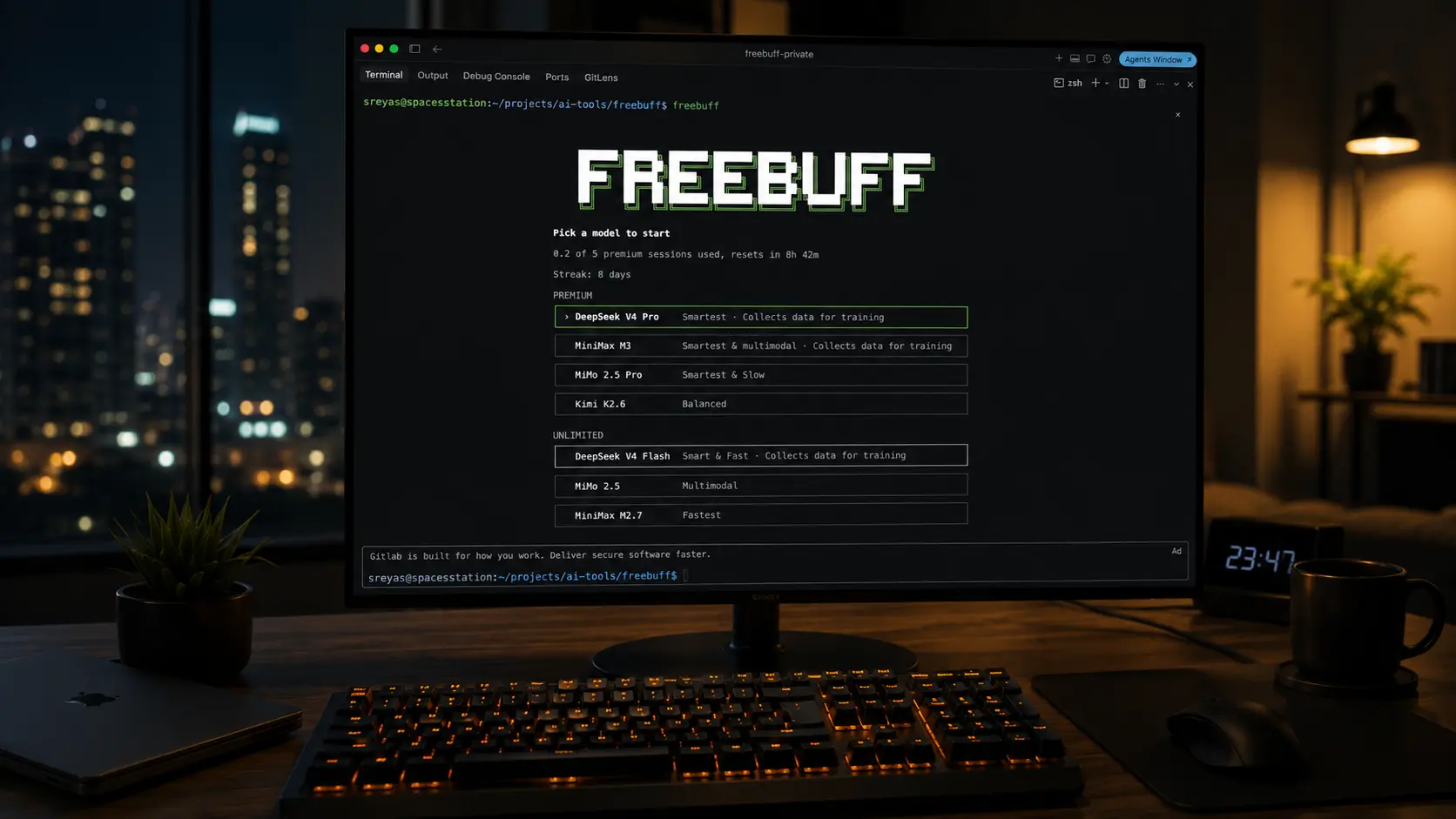
Freebuff AI Coding Agent: Feature Analysis and Practical Limits
Technical review of Freebuff AI Coding Agent: zero-subscription CLI architecture, multi-model routing across DeepSeek V4 and GLM-5.2, subagent orchestration, and privacy considerations.
Lucky Yaduvanshi
How to Use Meta Muse Code: Setup, Workflow, and First Project Guide
Step-by-step developer guide for Meta Muse Code: installation on macOS and Linux, dev.meta.ai authentication, workspace initialization, and autonomous agent workflows.
Lucky Yaduvanshi
GLM-5.3-FlashX: 200 Tokens/sec Throughput vs 2.5x Price Analysis
In-depth review of GLM-5.3-FlashX: 200 tokens/second inference throughput, latency benchmarks, and whether the 2.5x pricing premium is justified.
Lucky Yaduvanshi
TypeSafe AI Jev Access Guide: Free Trial Endpoints, API Pricing, and System One Architecture
How to access TypeSafe AI's Jev model for free: Vercel AI Gateway promotion, OpenRouter pricing at $0.042/1M tokens, latency benchmarks, and System One design.
Lucky Yaduvanshi