Muse Spark 1.2: Technical Specifications, Pricing, and Context Length
Technical review of Meta Muse Spark 1.2: 1M context window, context compaction, 82.9% Terminal-Bench score, token pricing, and co-training with Muse Code.

Synthesizing article benchmarks & model metrics...
Meta’s Muse Spark 1.2 is a specialized foundation model engineered specifically for autonomous software engineering, repository-scale refactoring, and multi-step agent trajectories. Launched on August 5, 2026 alongside the Muse Code terminal agent, Muse Spark 1.2 was co-trained directly with its agent runtime, incorporating context compaction, goal conditioning, and subagent worktree orchestration into the underlying weights.
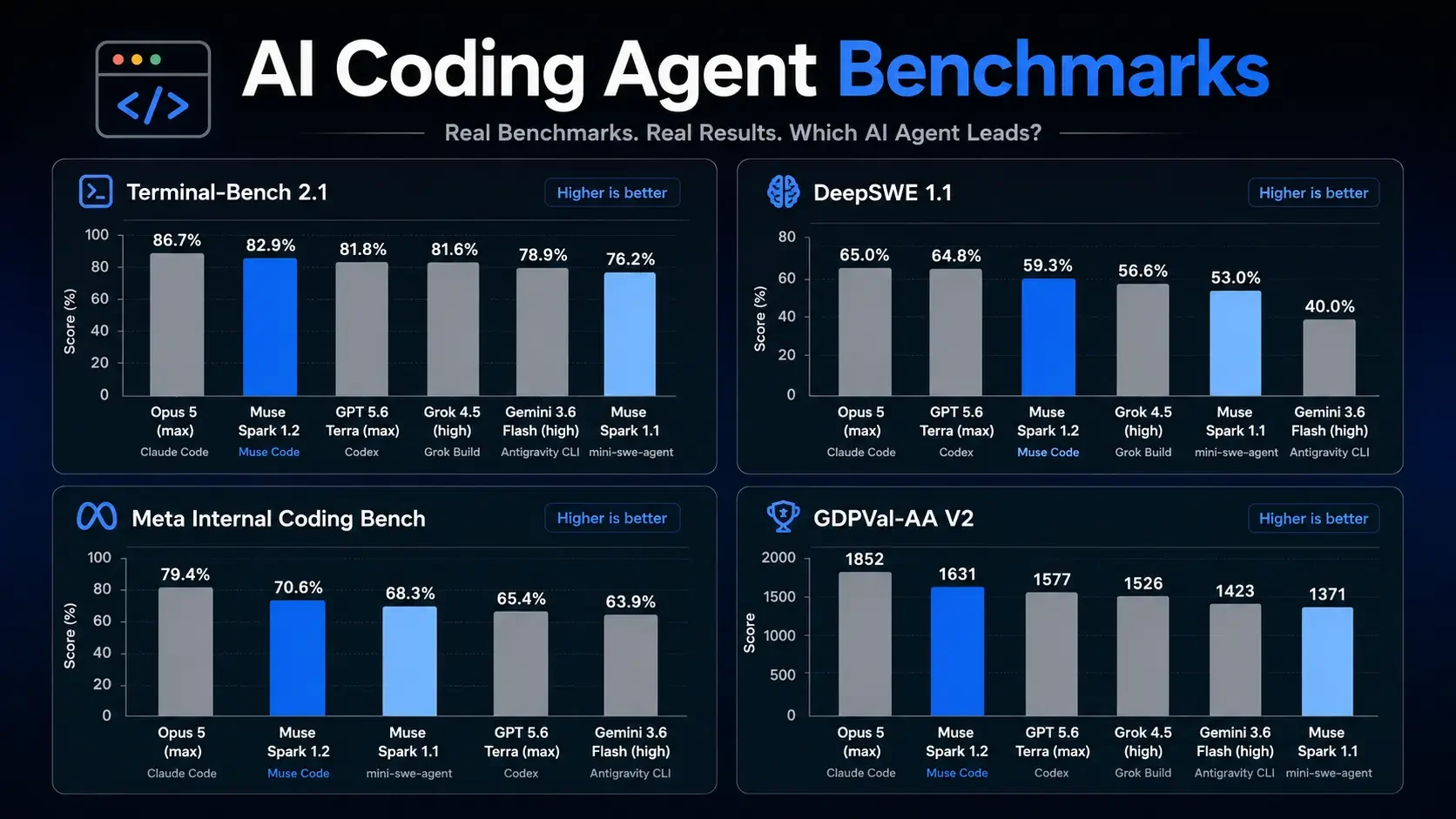
On standardized benchmarks, Meta reports Muse Spark 1.2 achieving 82.9% on Terminal-Bench 2.1, surpassing Claude Sonnet 5 (80.4%) by +3.1% relative and scoring an industry-leading 90.3% on MCP-Atlas tool execution. Explore where Muse Spark ranks in our AI Model Leaderboard and Full LLM Model Directory.
Executive Summary & Core Specification Matrix
| Specification | Muse Spark 1.2 Specification |
|---|---|
| Developer | Meta Superintelligence Labs |
| Release Date | August 5, 2026 |
| Primary Domain Focus | Autonomous software engineering, CLI agents, multimodal code |
| Context Window | 1,048,576 tokens (1M Standard) |
| Standard Input Price | $1.25 per 1M tokens |
| Cached Input Price | $0.15 per 1M tokens |
| Standard Output Price | $4.25 per 1M tokens |
| Contributor Tier Rates | $0.10 input / $0.20 output (Activity data shared) |
| Multimodal Perception | Native Text, High-Resolution Image, Video |
| Tool Calling & MCP | Native function calling, 90.3% MCP-Atlas score |
| Primary Runtime | Meta Muse Code, Meta Developer API |
Architectural Advancements: Model-Harness Co-Training
The critical technical differentiator in Muse Spark 1.2 is co-training with the Muse Code runtime:
- Context Compaction: Rather than carrying an ever-expanding conversational history that degrades attention fidelity, Muse Spark 1.2 was trained to compress past tool executions, bash outputs, and compiler traces into compact state representations.
- Subagent Worktree Coordination: The model understands Git worktree isolation, allowing it to delegate sub-tasks to parallel agent workers without generating conflicting file modifications.
- Continuous Execution Persistence: In an automated optimization experiment, Muse Spark 1.2 executed over 1,000 continuous tool calls across a 24-hour window, writing, profiling, and optimizing custom Triton GPU kernels on NVIDIA Hopper hardware without state collapse.
graph TD
    A["Developer Goal"] --> B["Muse Code Runtime"]
    B --> C["Muse Spark 1.2 Engine"]
    C --> D["Context Compaction & Planning"]
    D --> E["Tool Calls & Subagent Execution"]
    E --> F["Repository Diff & Test Suite"]
    F --> G["Final Code Verification"]
Benchmark Comparisons: Terminal-Bench 2.1
Meta evaluated Muse Spark 1.2 against top frontier models on Terminal-Bench 2.1:
| Model | Terminal-Bench 2.1 Score | Leaderboard Rank | Margin Analysis vs Muse Spark 1.2 |
|---|---|---|---|
| Claude Opus 5 Max | 86.7% | #1 | Opus leads by +3.8 pts (+4.6%) |
| Muse Spark 1.2 | 82.9% | #2 | Frontier Baseline |
| GPT-5.6 Terra | 81.8% | #3 | Muse Spark leads by +1.1 pts (+1.3%) |
| Grok 4.5 High | 81.6% | #4 | Muse Spark leads by +1.3 pts (+1.6%) |
| Claude Sonnet 5 | 80.4% | #5 | Muse Spark leads by +2.5 pts (+3.1%) |
| Gemini 3.6 Flash High | 78.9% | #6 | Muse Spark leads by +4.0 pts (+5.1%) |
| Muse Spark 1.1 | 76.2% | #7 | Muse Spark 1.2 leads by +6.7 pts (+8.8%) |
Methodological Note: Scores represent vendor-reported evaluations. Terminal-Bench evaluates live command-line tool execution, flag usage, and error recovery in real bash environments. For standard benchmarks, see our SWE-bench Verified Guide.
Token Economics: Standard vs Contributor Tier
Meta provides two commercial access tiers through the Meta Developer API:
- Standard Developer Tier: $1.25/M input and $4.25/M output, offering standard zero-retention enterprise privacy terms.
- Discounted Contributor Tier: $0.10/M input and $0.20/M output (a 92% input discount and 95% output discount). In exchange, Meta receives telemetry and interaction data to train future models.
For independent developers, open-source projects, and exploratory scripting, the Contributor tier provides exceptional value. For proprietary corporate codebases, standard rates or self-hosted models like Muse Glimmer remain required.
Final Verdict
Meta Muse Spark 1.2 represents the vanguard of harness-co-trained coding models.
By pairing an 82.9% Terminal-Bench score with 1M context length, context compaction, and $1.25 / $4.25 pricing, Meta delivers an engine purpose-built for the long-horizon autonomous workflows that define modern software engineering.
Read our complete How to Use Meta Muse Code Guide and track real-time benchmark scores on our AI Model Leaderboard.
Benchmark and pricing data is aggregated from OpenRouter, Artificial Analysis, and models.dev, then scored with the published RankLLMs Index. These are the primary sources behind the numbers in this article.
- •Meta AI Research: Introducing Muse Code and Muse Spark 1.2(Primary Source →)
- •Meta Developer: Muse Spark Platform(Primary Source →)
- •Reuters: Meta Launches New AI Coding Tool Powered by Muse Spark 1.2(Primary Source →)
Lucky Yaduvanshi(luckyyaduvanshi.in →)
Founder of RankLLMs • AI Researcher & Software Engineer focusing on LLM benchmarking, DevOps, and autonomous coding agents.
Recommended Reading
Continue exploring related technical benchmarks, model deep-dives, and autonomous coding agent guides.
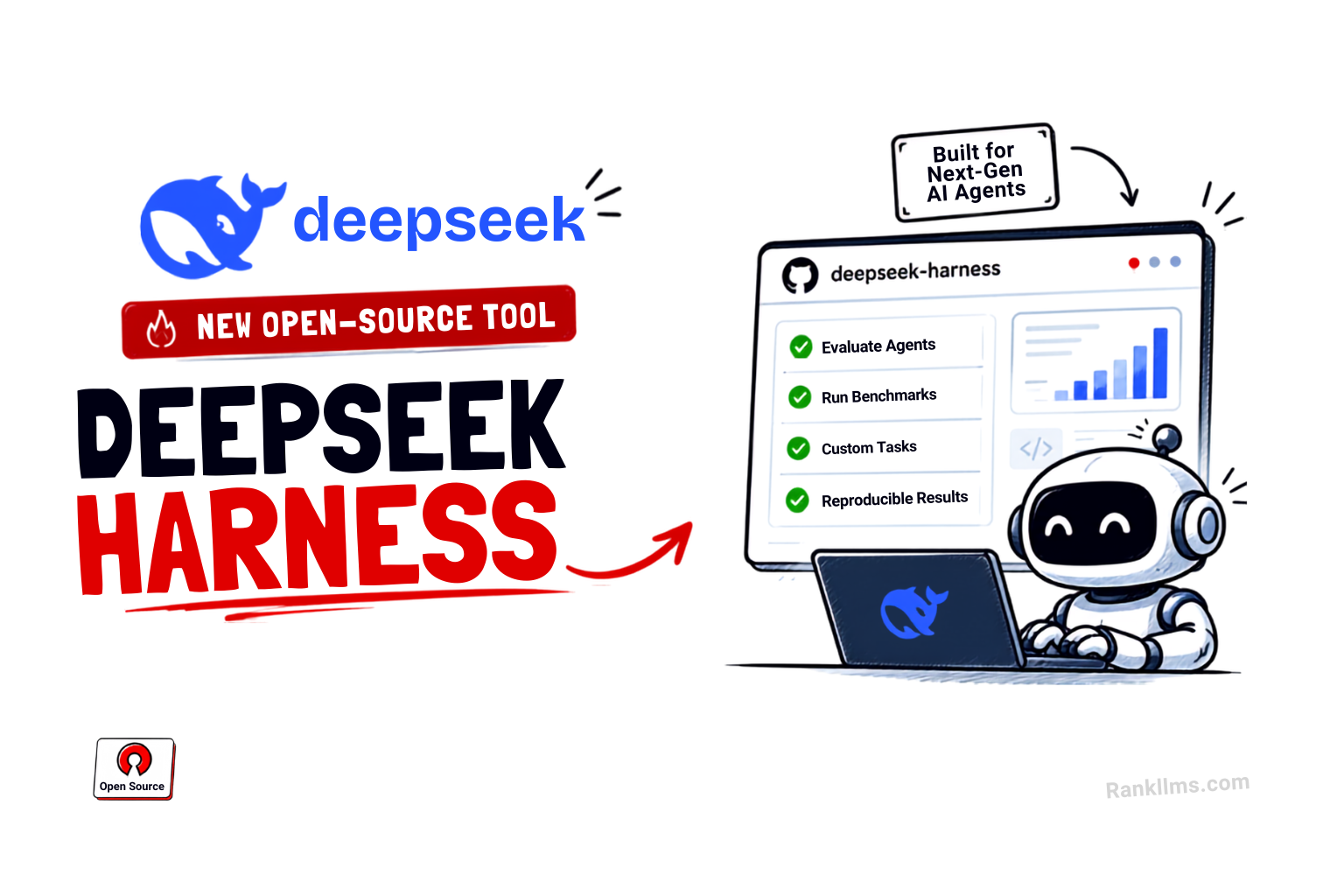
DeepSeek Harness: Architecture, Tool Execution, and Setup Guide
Comprehensive technical guide to DeepSeek Harness (dsh): Cordis micro-kernel architecture, append-only trajectory tracing, pluggable model adapters, and local deployment.
Lucky Yaduvanshi
DeepSeek V4 Pro 0813 vs GLM-5.3: Frontier Agent Benchmarks and Architecture
Frontier agent comparison: DeepSeek V4 Pro 0813 (1.6T MoE) vs Zhipu AI's GLM-5.3 across Terminal-Bench, SWE-bench, reasoning, and API economics.
Lucky Yaduvanshi
GLM-5.3 in ZCode: Agentic Coding Integration and Evaluation
Z.ai rolled out GLM-5.3 to all ZCode users with free tier access, reset quotas, and top scores on CyberGym (84.5%), GDPval-AA, and Terminal-Bench 2.1 (88.2).
Lucky Yaduvanshi
ZCode vs DeepSeek Harness: Integrated IDE vs Modular Agent Framework
ZCode and DeepSeek Harness represent two contrasting futures for AI coding agents: a full-stack desktop ADE vs a modular, plugin-based Cordis runtime. Here is how they compare in architecture, benchmarks, and real-world developer workflows.
Lucky Yaduvanshi